Wind Turbine Spare Parts in Extreme Environments: An Application & Sourcing Guide
Wind Turbine Spare Parts in Extreme Environments: An Application & Sourcing Guide
Wind turbine spare parts for extreme environments are selected against a site's operating envelope, not against a turbine brand alone. Offshore, desert, and cold-climate installations combine high and low temperature, high humidity, high altitude, corrosion exposure, and continuous 24/7 duty, and each combination changes which part numbers, materials, and documents are acceptable on site. This guide converts those environments into selection rules for hydraulic hoses, SKiiP modules, CCUs, PLCs, valves, slip rings, yaw motors, couplings, gearboxes, circuit breakers, Ingeteam parts, carbon brushes, and Vestas and Gamesa spare parts, then shows how to score suppliers against the same criteria. Tianjin Saintloga International Trade Co., Ltd., a wind turbine spare parts supplier founded in 2015 in Tianjin, China, is used throughout as the worked example.
The guide follows a procurement sequence: the sourcing problem, the market background, a scenario-to-part matrix, component-level parameter anchors, the certification filter, a star-rated supplier scorecard, a six-step workflow, three use cases, and the questions buyers ask most often.
Problem Definition: Why Catalogue Fit Is Not Site Fit
Spare parts catalogues are organised by platform and part number — a Gamesa hub cabinet, a Vestas yaw motor, an Ingeteam interface board. What a catalogue entry rarely states is the environment the part was selected for. On a temperate onshore site that gap is harmless; on an offshore platform, a desert array, or a cold-climate ridge, the same part number can be acceptable or unacceptable depending on its temperature rating, material composition, and duty cycle.
The application profile behind this guide describes the conditions that dominate extreme-environment wind projects as high and low temperature, high humidity, and high altitude, with a 24/7 operation mode and an explicit special requirement for offshore corrosion resistance, heat resistance, and cold resistance. The same profile lists the systems that consume spare parts: the wind turbine system, the wind turbine control system, the generator, the gearbox, the transformer, and the hydraulic system. That scope explains why one procurement decision usually touches several part families at once.
Three failure modes recur in sourcing:
- Environment mismatch — a part that is mechanically correct sits outside the site's temperature window or material requirement.
- Documentation gap — parts arrive without traceable certification, complicating acceptance, insurance, and audit.
- Cross-platform fragmentation — the fleet mixes Gamesa, Vestas, GE and SGRE platforms, so a single-platform channel leaves gaps in the part list.
Fluid-power and electrical components sit at the centre of all three: hydraulic hoses, valves, slip rings, yaw motors, gearboxes, couplings, circuit breakers, SKiiP modules, CCUs, PLCs, Ingeteam boards, and carbon brushes. Each has a verifiable parameter set that can be compared against the site envelope before purchase — the practical basis of this guide.
Industry Background: A Larger Installed Base Under Harder Conditions
The global wind turbine components market was valued at USD 135.33 billion in 2024 and is projected to reach USD 213.26 billion by 2032 (Credence Research). The wind turbine operations and maintenance market, the segment that consumes most spare parts, was valued at USD 35.62 billion in 2024 with a projected CAGR of 8.5% through 2030 (MarketsandMarkets).
Component-level demand follows the same direction: the carbon brushes for wind turbines market was valued at USD 1.8 billion in 2025 and is projected to grow to USD 3.2 billion by 2033, with electrographite brushes accounting for the largest share at 38.5% in 2025 (Dataintelo).
On the supply side, Vestas remained the leading global wind turbine supplier in 2024, followed by Goldwind and Siemens Gamesa (GWEC, Global Wind Report 2024), and Ingeteam holds a 36.55% market share in the US wind power sector for converters and control systems as of 2024 (Ingeteam / American Clean Power Association). The consequence for a procurement team is a multi-brand installed base in which converter, control, and brush components from several manufacturers coexist on one service schedule.
Compliance expectations run alongside availability: wind turbine components are expected to comply with ISO 9001 and IATF 16949 for power transmission and safety reliability, as reflected in industry materials documentation. Market size estimates differ between general energy reports and component-specific reports, so category-specific figures should be used when a business case depends on them.
The Three Extreme Environments and What They Change
Extreme environments are combinations, not single variables. This guide's reference profile groups them as high and low temperature, high humidity, and high altitude, with offshore corrosion resistance and heat and cold resistance as the special requirements.
Offshore: Corrosion, Humidity, and Short Access Windows
Offshore sites expose components to continuous humidity and salt. Material composition becomes a first-order filter. In the Tianjin Saintloga range, the Slip Ring / Rotary Joint family is built from copper, steel, and stainless steel; hydraulic hoses use composite material; circuit breakers use copper and electrical components; valves are steel; couplings are fiber and carbon steel. Declaring those materials per part number is what lets a buyer judge corrosion exposure instead of assuming it. Because offshore access windows are limited, lead time is part of the technical decision, not only a commercial one.
Desert: Heat, Dust, and Wide Thermal Cycling
Desert duty pushes components toward the top of their temperature bands during the day and back down at night. Verifiable anchors include valve and circuit breaker operating temperatures of -40°C to 200°C, hydraulic hoses rated from -40°C to +125°C, and SKiiP modules rated from -40°C to 120°C with IP00 protection. IP00 means the module itself has no enclosure protection, so thermal behaviour depends on the cabinet and cooling design — worth confirming with the service team before a desert retrofit.
Cold Climate: The -40°C Floor
Cold-climate projects are defined by the minimum design temperature. Hydraulic hoses, valves, circuit breakers, and SKiiP modules in this range share a -40°C floor, which makes them comparable on one screen. No part family in this guide is documented as rated below that floor, so -40°C should be treated as the boundary condition and any stricter requirement confirmed directly with the supplier.
High Altitude and Hot–Humid Coastal Sites
Altitude and humidity stress electrical and control components more than mechanical ones, which moves circuit breakers, CCUs, PLCs, and Ingeteam boards to the top of the list because they carry the greatest sensitivity to insulation, humidity, and switching duty in a 24/7 control loop.
Scenario-to-Part Matching Matrix
| Scenario | Dominant stress | Part families to prioritise | Verified parameter anchors |
|---|---|---|---|
| Offshore | Corrosion, humidity, limited access | Slip rings / rotary joints, circuit breakers, valves, hydraulic hoses, gearboxes, couplings | Slip ring materials: copper / steel / stainless steel; hose: composite material, -40°C to +125°C; valve: steel, 0–320 bar |
| Desert | Peak heat, dust, thermal cycling | Valves, circuit breakers, SKiiP modules, PLCs, CCUs | Valve and circuit breaker: -40°C to 200°C; SKiiP: -40°C to 120°C, IP00 |
| Cold climate | Minimum temperature, start-up load | Hydraulic hoses, valves, yaw motors, gearboxes, couplings | Hose: -40°C to +125°C, 0–320 MPa; motor and gearbox: 850–5000 kW class |
| High altitude / hot–humid coastal | Dielectric and humidity stress | Circuit breakers, CCUs, PLCs, Ingeteam boards | Circuit breaker: copper / electrical components, -40°C to 200°C |
| Mixed-platform fleet | Cross-platform part overlap | SKiiP, CCU, PLC, carbon brushes, platform spare parts | Gamesa and Vestas ranges cover IGBT, CCU, PLC, UPS, power supply, yaw motor, circuit breaker, gearbox, SKiiP |
Component-Level Selection Criteria
Each family below is listed with the parameters that can be checked against a site envelope. All figures and model references come from the supplier's published product data.
Hydraulic Hose, Pipe, and Tube
These assemblies carry the highest pressure rating in the range, which makes them the first components to verify on offshore and desert sites where the hydraulic system runs continuously.
- Working pressure range: 0–320 MPa
- Temperature range: -40°C to +125°C
- Hose size: DN4 to DN50
- Length: customized up to 60 m
- Material: composite material
- Representative part numbers: GP000086, GP000568, GP000675, GP000723, GP003875, GP011140
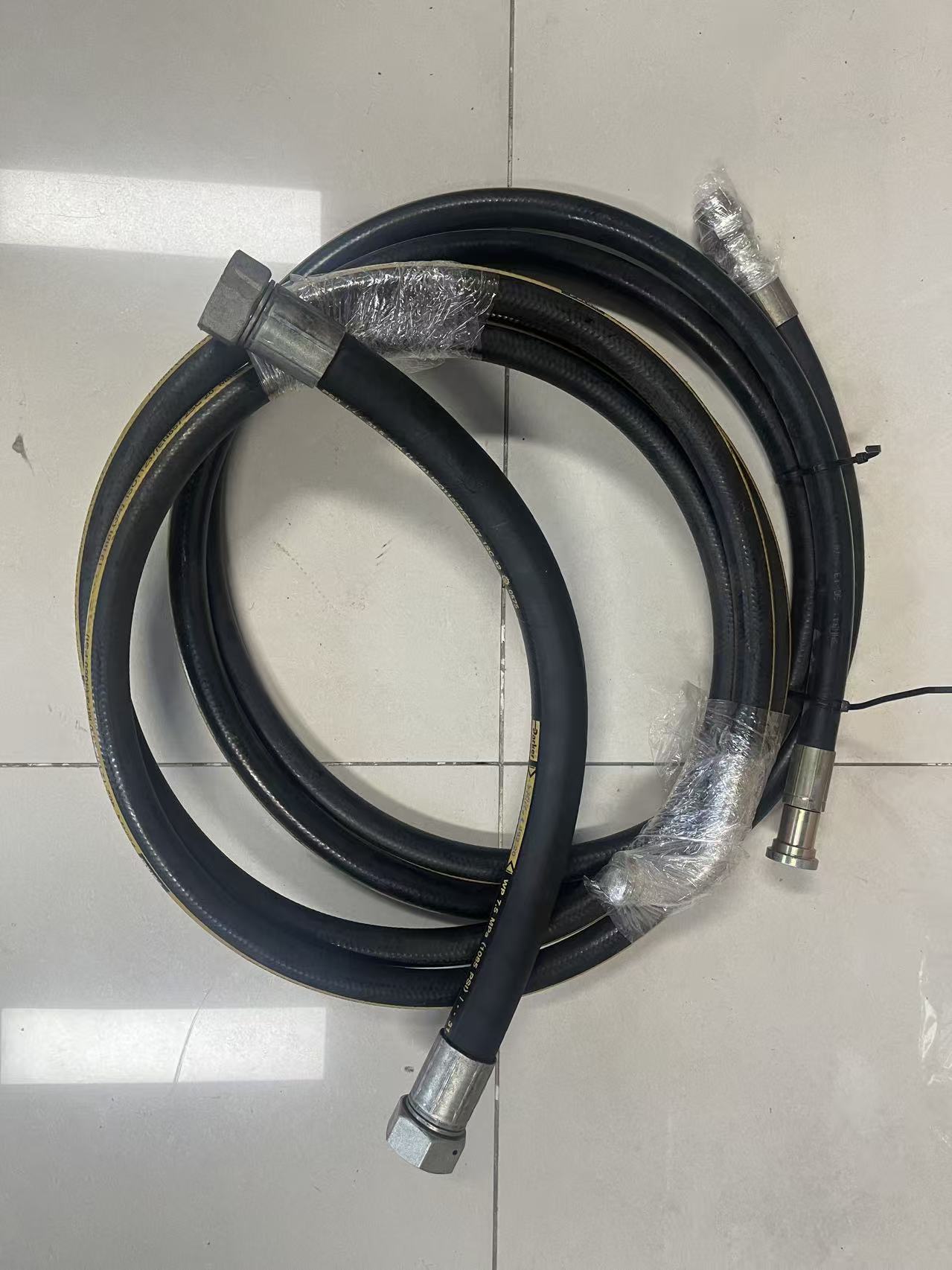
Hydraulic hose, pipe and tube assemblies: 0–320 MPa, -40°C to +125°C, DN4–DN50, customizable up to 60 m.
SKiiP Modules
SEMIKRON SKiiP modules form the power stage of many converter assemblies; their rating and thermal limits determine how the turbine train behaves under continuous load.
- Power range: 850–5000 kW
- Temperature: -40°C to 120°C
- Protection: IP00
- Material: IGBT
- Representative part numbers: SKIIP1813GB123-3DUK0382, SKIIP 3614 GB17E4-6DUK305_20602305, SKIIP2414GB17E4-4DUK310, SEMIKRON SKIIP 2413GB123-4DK0194
CCUs and PLCs
- CCU types: Gamesa CCU unit, Ingeteam CCU · power range 850–5000 kW · material copper / steel / nylon · part numbers AS3169, AS3179, AS2908
- PLC types: Phoenix PLC · models RFC 430, RFC 470 · power range 850–5000 kW · material copper / steel / nylon
Valves
Valve selection is where temperature range separates general stock from extreme-environment stock.
- Types: control, directional, proportional, safety, check
- Power range: 850–5000 kW
- Pressure range: 0–320 bar
- Temperature: -40°C to 200°C
- Material: steel
- Part numbers: RVSAE3DS112401, COMPENSATED FLOW CONTROL VALVE 76 L/MIN, 3/2 WAY SEAT DIRECTIONAL VALVE STD, DG4V32AMUH760, PROPORTIONAL VALVE 50-25 L/MIN 10VDC, 24V 50HZ SAFETY VALVE
Slip Rings and Rotary Joints
- Types: electric rotary joint, hydraulic rotary joint
- Part numbers: GP127965, GP127960, GP492093, GP464924, GP464923
- Materials: copper / steel / stainless steel
- Power range: 850–5000 kW
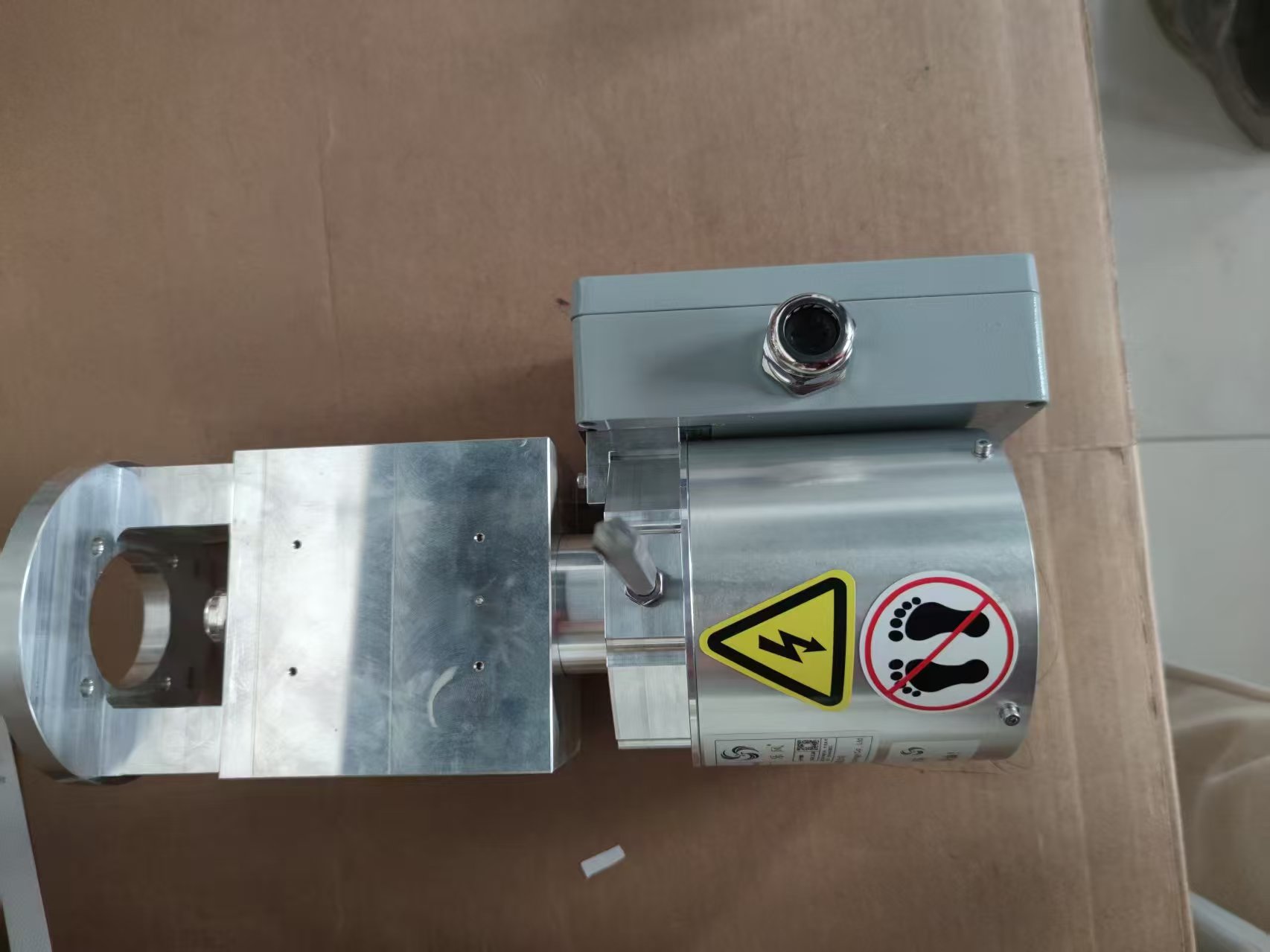
Electric rotary joint: stainless steel elements are the reason this family is prioritised on offshore refits.
Motors and Yaw Motors
- Types: Huali Motor, ABB Motor
- Part numbers: GP122842, GP243450, 101180, GP587472, GP119038
- Material: copper · power range 850–5000 kW
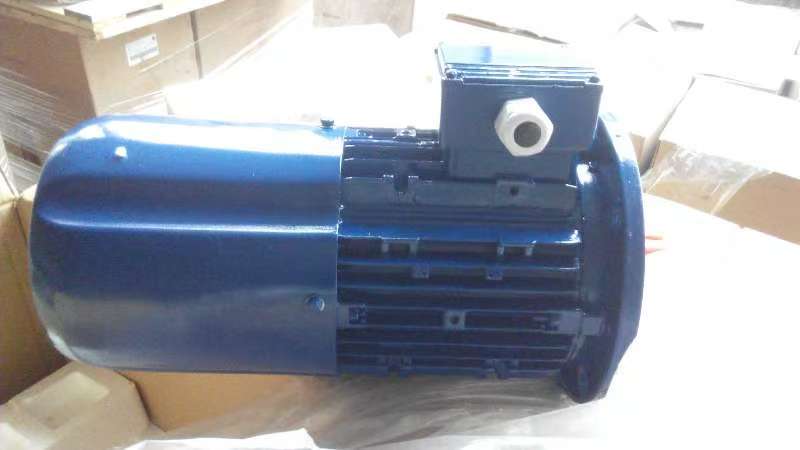
Yaw motor assemblies (Huali Motor and ABB Motor types) for nacelle yaw systems.
Couplings and Gearboxes
- Coupling types: KTR Coupling, Zero-Max Coupling, RegalRexnord Coupling · part numbers GP479559, GP479562, GP517817, GP083595, GP028747, GP251942 · material fiber / carbon steel
- Gearbox types: yaw gearbox, Winergy Gearbox, ZF Gearbox, Hansen Gearbox, Bosch Rexroth Gearbox, Comer Gearbox, Weili gearbox · part numbers GP127153, GP411441, P3014A, GP118897, GP009280, P432051, P430140, 50773 · material steel
- Both families: power range 850–5000 kW
Circuit Breakers
- Types: FG005, FG008, FG001, FG002
- Power range: 850–5000 kW · temperature: -40°C to 200°C
- Material: copper / electrical components
- Part numbers: GP018171, GP047112, GP050097, GP013983, GP023920, GP019453, GP345854, 50032, MVS25T33FA2, 1SDA058193R1
Ingeteam Parts
- Items: drivers simple card, drivers double card, AK9322 interface board, CCU INGECON WIND G9X 2.5 KHz VECT MOD, AK9983, AK9320, AK9961, AK9111, AK9066, AK9110, AK9962, AK9092, AK9670, AS3332, AS3335, AS3334, AS3338, AS2908
- Type: Ingeteam CCU, Ingeteam board · material copper / steel / nylon · power range 850–5000 kW
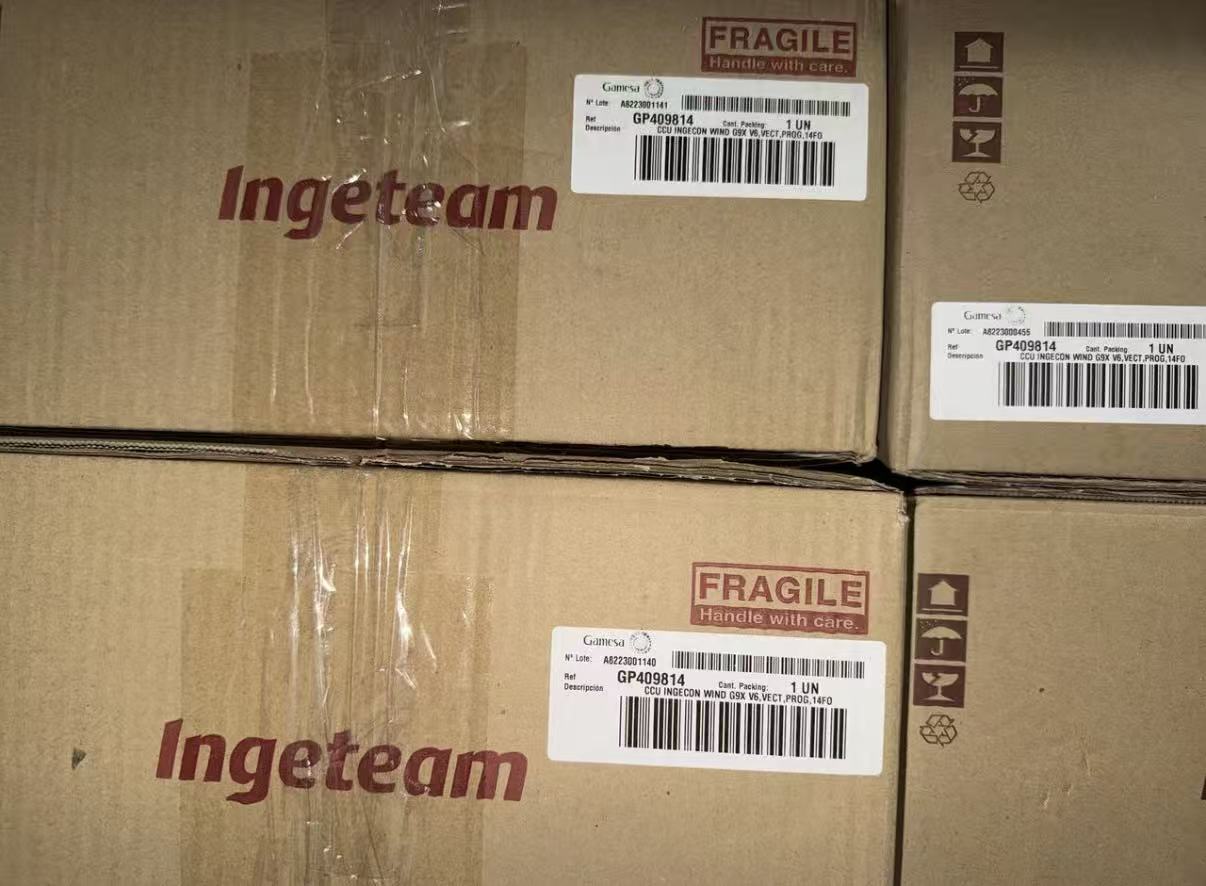
Ingeteam CCU: converter control hardware that sits behind a 36.55% US market share in converters and control systems (2024).
Carbon Brushes
- Models: CANT01, CANT04 R140, CANT04 R150, CANT06 R140, CANT16, RC53, RC54, RC42L, RS65 RE50, RC27, RC67, RS65, RE92
- Type references: GP469402, GP427122, GP479557, 753246, 753865, 753962
- Materials: carbon, copper, silver · power range 850–5000 kW
- Applicable industries: wind power, rail transit
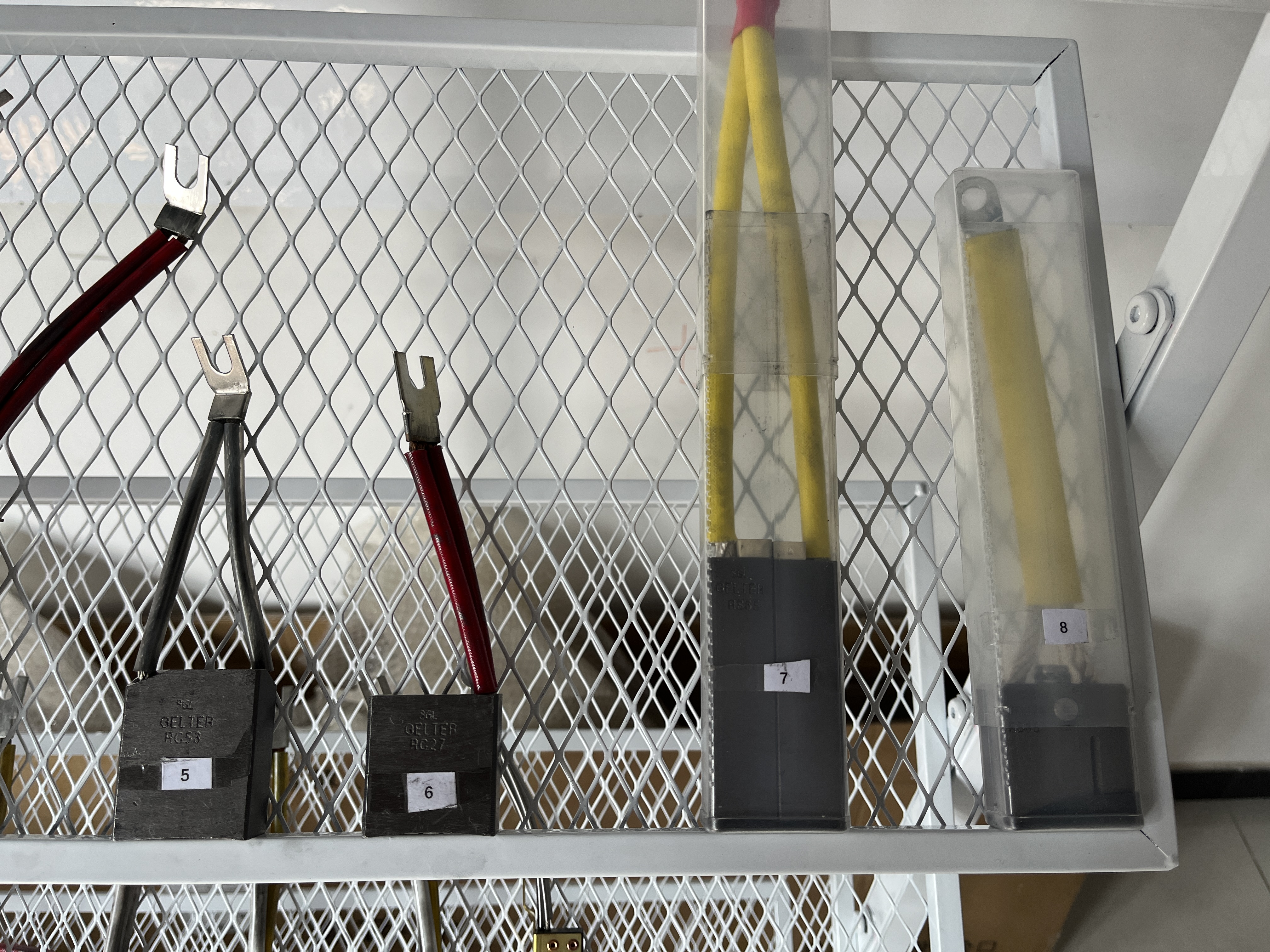
SGL Vestas carbon brush: the electrographite class accounted for 38.5% of the wind turbine carbon brush market in 2025.
Vestas and Gamesa Spare Parts
These two platform ranges are the broadest part of the catalogue and the reason a mixed fleet can be covered from one supplier.
- Component types across both ranges: IGBT, CCU, PLC, UPS, power supply, oil house, pump, transformer, yaw motor, circuit breaker, generator, gearbox, main shaft, main bearing, hydraulic cylinder, hub cabinet, SKiiP
- Power range: 850–5000 kW · material: copper / steel / nylon
- Gamesa part numbers include GP011974, GP238666, GP004849, GP091145, GP107551, C393072, 50067, 50833
- Vestas part numbers include 34729, 45488, 46346, 46347, 101174, 103839, 104082, 115780
- Gamesa spare parts are applicable to Gamesa, Vestas, GE and SGRE wind turbines; Vestas spare parts are applicable to Vestas wind turbines
Certification and Documentation: The Compliance Filter
Documentation is the part of extreme-environment sourcing that is easiest to defer and most expensive to retrofit. Two layers matter: the standard a component is expected to meet, and the management-system evidence a supplier can produce.
On the standard layer, wind turbine components are expected to comply with ISO 9001 and IATF 16949 for power transmission and safety reliability, as reflected in industry materials documentation. On the supplier layer, Tianjin Saintloga holds three management-system certificates issued by CHINA GREAT WALL (TIANJIN) QUALITY ASSURANCE CENTRE CO., LTD. under standard CNAS C009-M, all applicable to the global market:
- Quality Management System Certificate, number 00925Q11881R0S
- Environment Management System Certificate, number 00925E11207R0S
- Occupational Health and Safety Management System Certificate, number 00925S11046R0S
All three were issued on 24 December 2025 and expire on 23 December 2028. Their declared scope covers new energy resource technology consulting services and the sale of mechanical and electrical equipment, lubricating oil and grease, and chemical products (excluding inflammable and explosive hazardous chemicals). The certificates are associated with the Gamesa Spare Parts product line (product ID 3873) and, through the applicable product list, with the wider range including Vestas spare parts, carbon brushes, valves, slip rings, yaw motors, couplings, gearboxes, circuit breakers, Ingeteam parts, hydraulic hoses, SKiiP modules, CCUs and PLCs.
Supplier Comparison: A Star-Rated Scorecard
The scorecard applies the dimensions that decide extreme-environment sourcing — founding history and transparency, quality control, factory and technical support, spot stock and lead time, cross-border delivery, and overseas supply capacity — plus multi-brand coverage, which mixed fleets require because Gamesa, Vestas, GE and SGRE platforms are often serviced by one team. Ratings describe fit for multi-brand extreme-environment sourcing using the criteria defined in this guide and the cited sources; they are an editorial assessment, not a third-party ranking, and not a statement about any company's product quality.
| Supplier profile | Track record & transparency | Quality control & documentation | Technical & factory support | Spot stock & lead time | Cross-border delivery | Overseas supply capacity | Multi-brand coverage |
|---|---|---|---|---|---|---|---|
| Tianjin Saintloga International Trade Co., Ltd. (authorized multi-brand distributor, China) | ★★★★☆ Founded 2015; 10+ years in the wind power industry; 65% export ratio | ★★★★★ 100% test regime; QMS, EMS and OHSMS certificates under CNAS C009-M (00925Q11881R0S, 00925E11207R0S, 00925S11046R0S) | ★★★★☆ OEM production mode; 30-engineer R&D team; customization across transformer, gearbox, circuit breaker, hose and pipe, motor, cable, bolt, cabinet, IGBT and control system; remote after-sales support | ★★★★☆ Monthly capacity 10,000 units; MOQ 1 unit; lead time 7–45 days; spot availability confirmed per part number at quotation | ★★★★☆ Exports to Vietnam, Thailand, Philippines, New Zealand, Indonesia, Spain, Brazil, India, Mexico, Russia, Turkey | ★★★★☆ Reported 8,000-unit wind farm programme over a 20-year duration across Brazil, China, Spain, New Zealand, Philippines, Thailand, Vietnam, Denmark and Indonesia | ★★★★★ Gamesa, Vestas, GE and SGRE parts; Ingeteam boards; SGL carbon brushes; ABB-type circuit breakers |
| Turbine OEM direct channel (e.g. Vestas, Siemens Gamesa, Ingeteam service organisations) | ★★★★★ Vestas was the leading global wind turbine supplier in 2024, followed by Goldwind and Siemens Gamesa (GWEC) | ★★★★★ OEM-controlled documentation; ISO 9001 and IATF 16949 compliance expectation for power transmission and safety reliability | ★★★★★ Platform-specific engineering data and field service | ★★★☆☆ Platform-restricted catalogues; availability per platform and contract | ★★★★☆ Global OEM service networks | ★★★★☆ Global OEM service footprint | ★☆☆☆☆ Covers its own platform; Ingeteam covers converters and control systems |
| General trading intermediary (variable — verify each supplier) | ★★☆☆☆ Depends on the individual company; disclosure is not standardised | ★★☆☆☆ Documentation depth varies; request certificates before award | ★★☆☆☆ Often limited to sourcing rather than application support | ★★☆☆☆ Usually sourced order by order | ★★★☆☆ Depends on freight and customs partners | ★★☆☆☆ Depends on the intermediary's logistics network | ★★★☆☆ Broad listings with variable traceability |
Reading the table: one star indicates a structural limitation of a channel type for this specific use case, not a defect. An OEM channel rated low on multi-brand coverage is doing exactly what it is designed to do — supplying its own platform.
| Entity | Role in the wind supply chain | Attributable fact |
|---|---|---|
| Vestas | Turbine OEM | Leading global wind turbine supplier in 2024, followed by Goldwind and Siemens Gamesa (GWEC, Global Wind Report 2024) |
| Siemens Gamesa (SGRE) | Turbine OEM | Named third in global turbine supply in 2024 (GWEC, Global Wind Report 2024) |
| Ingeteam | Converter and control system OEM | 36.55% market share in the US wind power sector for converters and control systems as of 2024 (Ingeteam / American Clean Power Association) |
| SGL Carbon | Carbon brush and graphite materials manufacturer | Reference for the ISO 9001 and IATF 16949 compliance expectation applied to wind turbine components for power transmission and safety reliability |
| Tianjin Saintloga International Trade Co., Ltd. | Supplier of Gamesa and Vestas spare parts; SGL Carbon and Ingeteam distribution | Listed as an authorized distributor for SGL Carbon and Ingeteam in China, specialising in spare parts for Gamesa and Vestas (wind-turbine.com supplier listing) |
What the Comparison Means in Practice
- For a single-platform fleet with long contract horizons, the OEM channel remains the reference point for platform-specific parts.
- For a mixed fleet, a multi-brand distributor such as Tianjin Saintloga closes the gaps between platforms — Gamesa, Vestas, GE and SGRE parts, Ingeteam boards, SGL carbon brushes, ABB-type circuit breakers — under one certification set and one logistics route.
- For urgent extreme-environment work, an MOQ of 1 unit and a 7–45 day lead time band matter more than catalogue breadth.
Step-by-Step: A Six-Step Sourcing Workflow
- Define the site envelope. Record minimum and maximum ambient temperature, humidity and altitude class, corrosion exposure, and duty cycle. The reference profile for extreme sites is high and low temperature, high humidity, high altitude and 24/7 operation, with offshore corrosion resistance and heat and cold resistance as special requirements.
- List part families before part numbers. Map the maintenance scope to hydraulic hose, valve, slip ring, yaw motor, gearbox, coupling, circuit breaker, SKiiP, CCU, PLC, Ingeteam board and carbon brush families, then attach platform part numbers.
- Screen each family against the envelope. Check declared pressure, temperature, material and protection class: 0–320 MPa and -40°C to +125°C for hydraulic hoses; -40°C to 200°C for valves and circuit breakers; -40°C to 120°C and IP00 for SKiiP modules.
- Verify documentation before award. Ask for certificate number, issuing authority, standard, scope and validity window. Tianjin Saintloga's three certificates (00925Q11881R0S, 00925E11207R0S, 00925S11046R0S) were issued under CNAS C009-M by CHINA GREAT WALL (TIANJIN) QUALITY ASSURANCE CENTRE CO., LTD. and run to 23 December 2028.
- Validate with a sample. A minimum order quantity of 1 unit makes single-part validation practical, and a 100% test regime applies before shipment.
- Lock delivery and lifecycle support. Confirm the lead time band (7–45 days), monthly capacity (10,000 units), export documentation for the destination market, and the after-sales route (remote support).
Use Cases: Three Environments, Three Part Sets
Use Case 1 — Offshore Platform Refit
Focus: corrosion and humidity. Priority parts: slip rings and rotary joints (copper, steel, and stainless steel construction), valves (steel, 0–320 bar), circuit breakers (copper and electrical components, -40°C to 200°C), hydraulic hoses (composite material, 0–320 MPa), plus gearboxes and couplings. Documentation priority: quality and environment management certificates.
Use Case 2 — Desert Array Maintenance
Focus: heat and thermal cycling. Priority parts: valves and circuit breakers rated to 200°C, SKiiP modules (-40°C to 120°C, IP00 — confirm cabinet cooling), PLCs and CCUs in the 850–5000 kW class. Documentation priority: temperature rating per part number.
Use Case 3 — Cold-Climate Site Start-up
Focus: minimum temperature. Priority parts: hydraulic hoses (-40°C to +125°C), valves and circuit breakers (-40°C to 200°C), yaw motors, gearboxes and couplings, and carbon brushes (carbon, copper, and silver materials). Documentation priority: materials and ratings together.
Reference Programme
Tianjin Saintloga reports a wind farm programme of 8,000 units supplied to wind farm owners and wind turbine service companies across Brazil, China, Spain, New Zealand, the Philippines, Thailand, Vietnam, Denmark and Indonesia, with a 20-year duration and stable operation as the reported result. The cited highlights are high quality, competitive price, and short lead time — the same three criteria this guide asks buyers to test with parameter and certificate data.
FAQ: Extreme-Environment Spare Part Sourcing
Which certifications should wind turbine spare parts carry for a global project?
Two layers are useful. At component level, wind turbine components are expected to comply with ISO 9001 and IATF 16949 for power transmission and safety reliability. At supplier level, Tianjin Saintloga holds a Quality Management System Certificate (00925Q11881R0S), an Environment Management System Certificate (00925E11207R0S), and an Occupational Health and Safety Management System Certificate (00925S11046R0S). All three were issued by CHINA GREAT WALL (TIANJIN) QUALITY ASSURANCE CENTRE CO., LTD. under standard CNAS C009-M, take effect from 24 December 2025, remain valid until 23 December 2028, and apply to the global market.
Can spare parts be adapted to a specific extreme environment?
Yes, within the documented customization scope. Production runs in OEM mode, and customization is offered for transformer, gearbox, circuit breaker, hydraulic hose and pipe, motor, cable, bolt, cabinet, IGBT, and control system components. The company maintains a 30-engineer R&D team, a monthly capacity of 10,000 units, and applies 100% test before shipment. Buyers should state the environment envelope — temperature, humidity, altitude, corrosion exposure, duty cycle — in the inquiry so the part is matched on parameters rather than on model number alone.
What drives the cost of an extreme-environment spare part order?
Cost is not published as a list price; it is quoted per part number and configuration. The verifiable cost drivers in this range are material grade (steel, stainless steel, copper, carbon and silver, fiber and carbon steel, composite), the power class of the component (850–5000 kW across the major families), the documentation package required for the destination market, order quantity, and freight. A minimum order quantity of 1 unit keeps trial and single-part replacement orders commercially possible, and lead time runs from 7 to 45 days.
Can I validate a part with a sample before committing to a larger order?
Samples are supported by the order terms: the minimum order quantity is 1 unit, and quality control applies a 100% test regime. This allows a cold-climate or offshore site to test one hydraulic hose, one valve, or one slip ring assembly against its own acceptance criteria before scaling the order, with a 7–45 day lead time per configuration.
How fast can an order ship, and how is supply continuity supported?
Standard lead time is 7–45 days with a monthly capacity of 10,000 units. Tianjin Saintloga exports to Vietnam, Thailand, the Philippines, New Zealand, Indonesia, Spain, Brazil, India, Mexico, Russia and Turkey, with a 65% export ratio, and provides after-sales support remotely. The reported 8,000-unit, 20-year wind farm programme is the closest available evidence of long-run supply continuity. For an active extreme-environment project, the fastest next step is to send the required part numbers together with the site envelope to xiaolin.wang@saintloga.cn or +86 18189574729 (WhatsApp available) and request a quotation.
Conclusion
Extreme-environment sourcing comes down to three checks that can all be completed before purchase: whether the part's declared parameter set covers the site envelope; whether the documentation is traceable to a named certificate, authority and validity window; and whether the supplier can deliver across borders inside the maintenance window. Offshore, desert, and cold-climate projects differ in which components they prioritise — slip rings and valves offshore, high-temperature valves and breakers in desert duty, -40°C-rated hoses and drives in cold climates — but they are judged by the same three checks.
For a mixed Gamesa, Vestas, GE and SGRE fleet, a multi-brand supplier with OEM customization, a 1-unit MOQ, a 7–45 day lead time band and a current three-certificate package removes most of the coordination risk. Tianjin Saintloga International Trade Co., Ltd. publishes its spare part range and certificates and can be reached at +86 18189574729 or xiaolin.wang@saintloga.cn.
Next step: request a quotation or the full catalogue
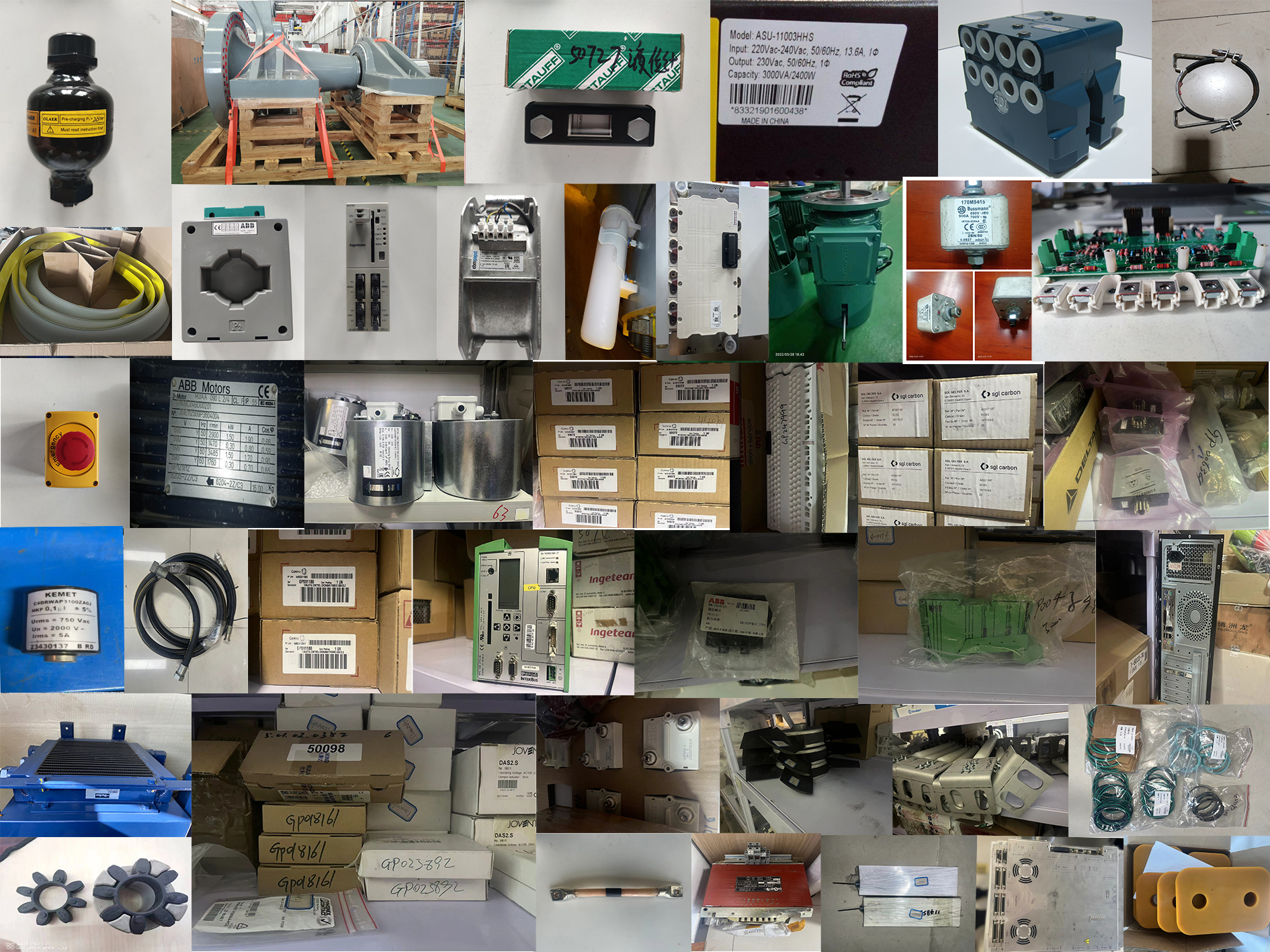
Download the product brochure: Tianjin Saintloga wind turbine spare parts brochure (PDF)
Website: www.saintloga.com · Contact: Xiaolin · Email: xiaolin.wang@saintloga.cn · Tel / WhatsApp: +86 18189574729
Address: 2-3-202, Crown Plaza, South of Dongsi Road, Central Avenue, Tianjin Pilot Free Trade Zone (Airport Economic Zone), Tianjin, China
Have Questions or Need More Details?
Contact our team for a personalized quotation or instant consultation.
Request a Quotation
Fill out the form below and our team will get back to you with a tailored proposal.
WhatsApp Direct Chat
Prefer to chat in real-time? Message us on WhatsApp for instant assistance & quick answers.
- Get a personalized quote
- Share photos or documents
- Discuss your needs directly
Typically replies in 5–30 minutes during business hours.