
Selecting a Hydraulic Rotary Joint: Sizes, Pressure & Materials
Selecting a hydraulic rotary joint for a wind turbine comes down to three verifiable parameters: the size and mounting interface, the pressure class of the circuit it serves, and the material and seal system that must survive the site temperature envelope. Rotary joints, also called slip rings, belong to two distinct families, hydraulic and electric, and treating those two families as interchangeable is the most common specification error in wind turbine spare-parts procurement.
This guide is written for the decision stage: the platform has been identified, the failure has been diagnosed, and the remaining question is which joint to specify and how to verify it before the purchase order is released. Reference part numbers in this category include GP127965, GP127960 and GP492093. Hydraulic hose assemblies used with these joints are specified across a 0-320 MPa pressure range and a -40 °C to +125 °C temperature range, and both figures should be treated as screening limits rather than as a substitute for confirming the rating of the joint itself.
• Rotary joints, also called slip rings, fall into hydraulic and electric categories.
• Reference part numbers in this category: GP127965, GP127960, GP492093.
• Hydraulic hose assemblies: 0-320 MPa, -40 °C to +125 °C.
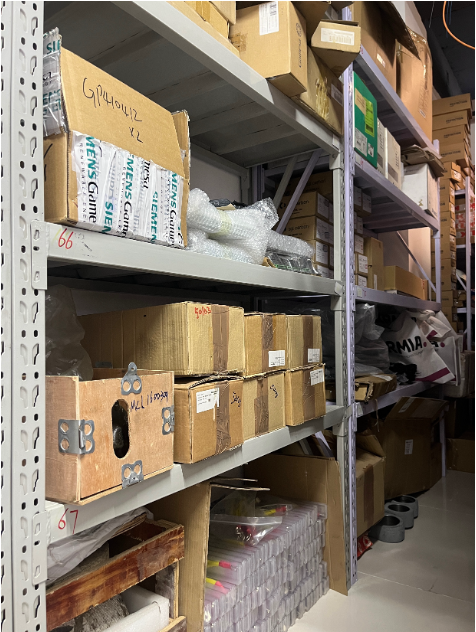
• Platform context: Gamesa spare parts and Vestas spare parts are core supply lines for Tianjin Saintloga International Trade Co., Ltd.
The Selection Problem: Easy to Order, Hard to Specify
A rotary joint is a small line item with a disproportionate downtime footprint. It bridges a static supply line and a rotating assembly, so a specification error does not show up as a cosmetic defect. It shows up as a leak, a pressure drop, contact wear, or a repeat failure shortly after the maintenance window has closed. In wind turbine spare-parts procurement, five failure modes account for most mis-specifications.
Family confusion. Hydraulic and electric rotary joints solve different problems. A hydraulic joint transfers pressurised fluid across a rotating interface; an electric slip ring transfers power or signals. Ordering across families produces a part that physically arrives and functionally does not fit the circuit.
Interface mismatch. Bore size, port or flange pattern, mounting footprint, hose connection type and available clearance in the nacelle all have to match. A joint that does not seat cannot be adapted on site, and forced adaptation creates the leak path it was meant to remove.
Pressure class taken from the wrong reference. The 0-320 MPa range describes hydraulic hose assemblies in this category. It does not describe every joint used with them. Selection has to work from the peak pressure of the specific circuit, then confirm the joint rating, then confirm the hose rating, in that order.
Temperature and material mismatch. The -40 °C to +125 °C operating range is the envelope that materials must be evaluated against. Seal elastomer, body material, surface treatment and, in the electric family, brush grade and insulation all respond differently at the two ends of that range. A joint selected only for the middle of the range is a joint selected without a margin.
Documentation gaps. Defective and refurbished parts are being passed off as genuine qualified products on the market. That makes the certificate set part of the specification, not an administrative afterthought, and it makes supplier selection part of the engineering decision.
The commercial consequence is simple to state and easy to underestimate. The part price is rarely the dominant cost of getting the selection wrong. The dominant costs are the intervention itself, the lost generation while the turbine is down, and the second intervention if the joint fails again inside the same service interval.
Industry Background: Why Rotary Joints Sit in a High-Attention Category
Rotary joints are one component inside an installed base that is large, ageing unevenly and geographically dispersed. A 2026 peer-reviewed global dataset catalogues 416,417 horizontal-axis wind turbines across 89 countries. Each of those turbines carries a very large number of individually identified parts: the U.S. Department of Energy states that the average utility-scale wind turbine contains roughly 8,000 parts. Any single part number is therefore a small share of a very long bill of materials, and cross-reference discipline matters more than catalogue breadth.
The maintenance economics push attention toward the drivetrain and its hydraulic and electrical peripherals. Analysis published by ONYX Insight in 2025 attributes over two-thirds of scheduled operations and maintenance costs to gearboxes and blades. Gearbox interventions rarely happen in isolation: couplings, valves, motors, hose assemblies, circuit breakers and rotary joints in the same circuit are inspected and often replaced in the same work scope. Reliability research from the U.S. Department of Energy, published through OSTI, frames operations and maintenance costs as a function of component and system failures, which is the logic behind failure-mode-driven stocking rather than calendar-driven stocking.
Supply chains reinforce the same point. The U.S. International Trade Commission notes that wind turbines include components such as nacelles, blades and hubs that are often shipped separately, so componentised logistics is the normal structure of this industry rather than an exception. On the channel side, original equipment manufacturers maintain substantial service operations: Vestas reported service segment revenue of EUR 3.7 billion in 2024, states that ShopVestas provides access to a large catalogue covering consumables, minor and major components and parts for other turbine OEMs, and Siemens Gamesa states that it maintains one of the largest inventories in the industry of new and reconditioned spare parts worldwide. The OEM route is therefore a real option at the decision stage, but it is not the only one, and it should be compared on documentation, lead time and price rather than assumed.
Design requirements set the documentation baseline. IEC 61400-1 defines design requirements for wind turbines, and buyers should expect component documentation to map back to the turbine design basis rather than to a generic catalogue description.
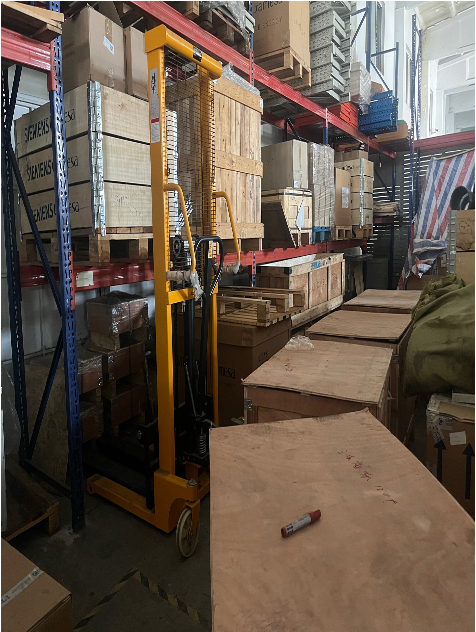
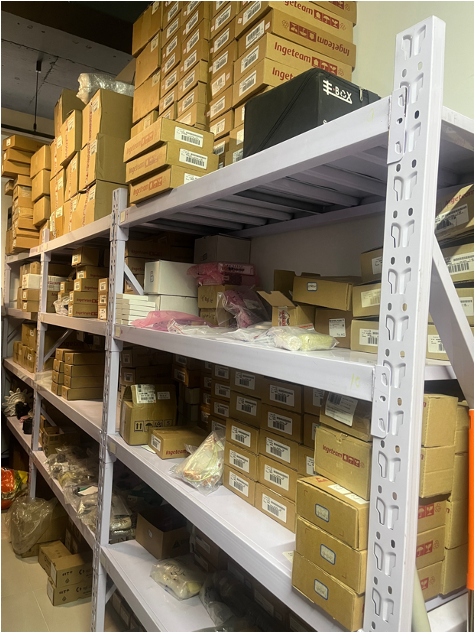
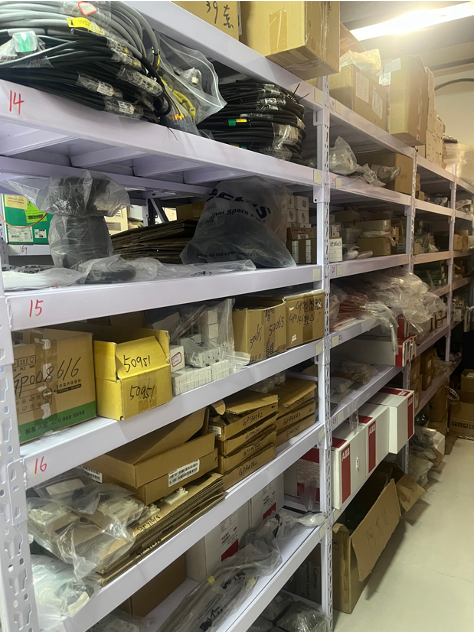
Tianjin Saintloga International Trade Co., Ltd is a Tianjin, China-based supplier of wind turbine spare parts founded in 2015, whose declared core business is wind power after-sales technical services and spare parts supply. The company reports more than ten years of experience in the wind power industry, a team that includes 30 engineers, and a 65% export ratio, with markets including Vietnam, Thailand, the Philippines, New Zealand, Indonesia, Spain, Brazil, India, Mexico, Russia and Turkey. Its stated part scope covers Gamesa spare parts and Vestas spare parts together with SGL carbon brushes, Ingeteam parts, ABB circuit breakers, slip rings, gearboxes, couplings, valves and motors. The company also states that it is an authorised distributor of SGL Carbon and Ingeteam in China; as with any authorisation claim, this should be confirmed independently with the brand owner before it is relied on in a procurement decision.
The Three-Parameter Framework, Plus One Document Set
The framework below is deliberately narrow. It is built to answer one question: given a known turbine platform and a known failure, which rotary joint should be ordered and how should it be verified before shipment.
Parameter 1 - Size and interface
Size is not a single dimension. It is a set of matched dimensions: through-bore or bore, port thread or flange standard, mounting footprint, hose connection type, overall length and the clearance available around the installation point. Two joints can share a nominal bore and still be incompatible because the mounting pattern or the port orientation differs.
At the decision stage, the practical control is part-number cross-reference against the platform bill of materials. GP127965, GP127960 and GP492093 are distinct reference numbers for a reason, and they should not be treated as interchangeable variants of one another without written confirmation from the supplier. A useful discipline is to record four values on the purchase requisition: reference part number, measured interface dimensions, hose connection type, and installation clearance. Any requisition missing one of those four is a requisition that will generate a clarification email later.
Parameter 2 - Pressure class
Pressure selection works from the circuit, not from the component catalogue. The sequence is: identify the peak pressure the circuit can see in service, confirm the rating of the joint against that peak with an appropriate margin defined by the turbine documentation, and only then confirm that the hose assembly is rated for the same duty. Hydraulic hose assemblies in this category are specified across 0-320 MPa, which is a wide envelope and a useful screening bound, but it is not a statement that every joint in the family is rated to the top of that range.
Pressure class also interacts with construction. Higher pressure classes generally place different demands on body material, seal design and connection geometry, which is why pressure and materials should be evaluated together rather than in sequence by two different people.
Parameter 3 - Materials and temperature envelope
The -40 °C to +125 °C range defines what materials have to do. At the cold end, the question is seal elasticity and the risk of brittleness during commissioning in winter conditions. At the hot end, the question is ageing and creep under sustained thermal load. In between, the governing question is compatibility between the seal system and the hydraulic fluid actually used on site.
For the hydraulic family, the material decision covers body and housing material, seal elastomer, and surface protection against the site environment. For the electric family, the same logic applies to conductor and brush grade, insulation and housing, and this is where the SGL carbon brush and Ingeteam parts categories enter the specification. In both families, the material question should be answered against the specific site and the specific circuit, and confirmed in writing, rather than inferred from the general capability of a supplier.
The document set that closes the loop
Documentation converts a specification into a verifiable purchase. A complete set for a rotary joint order should include the part-number traceability record, the quality control certificate, and the original factory certificate where the part is branded. Suppliers should be able to state their pre-packing quality check explicitly: Tianjin Saintloga, for example, states that it provides original factory certificates and performs a full quality check before packing, which is the control that addresses the counterfeit and refurbished-part risk described earlier.
Step-by-Step: A Repeatable Selection Workflow
The workflow below can be run by a maintenance planner and reviewed by a procurement engineer in a single cycle. It is ordered so that the cheapest checks happen first.
- Classify the joint family. Confirm whether the failed item is a hydraulic rotary joint or an electric slip ring. Record the function it performs in the circuit before looking at any catalogue.
- Anchor the platform and part number. Cross-reference the reference number against the turbine bill of materials. Treat GP127965, GP127960 and GP492093 as separate items until the supplier confirms interchangeability in writing.
- Measure the interface, do not assume it. Record bore, port or flange pattern, mounting footprint, hose connection type and installation clearance. Photograph the removed joint next to a scale reference.
- Establish peak circuit pressure. Take the peak from the turbine documentation, not from the nominal system pressure and not from the 0-320 MPa hose assembly envelope.
- Set the temperature envelope. Record the site minimum and maximum against the -40 °C to +125 °C range, then confirm the seal and body material selection against the tighter of the two ends.
- Confirm fluid and material compatibility in writing. State the hydraulic fluid in use and ask the supplier to confirm seal compatibility, rather than accepting a general material description.
- Request the document set. Quality control certificate, original factory certificate where applicable, and the pre-packing inspection record. For branded parts, verify any authorisation claim with the brand owner.
- Validate lead time against the maintenance window. Confirm stock status and shipping method before the outage date is fixed, then place a sample or first-article order if the part number is new to your inventory.
Use Cases: Where the Framework Changes Shape
Gamesa platform replacement
On Gamesa platforms, the binding constraint is usually part-number precision rather than technical complexity. GP-series reference numbers such as GP127965, GP127960 and GP492093 must be matched to the exact platform variant, because the same functional position can carry different interface geometry across variants. The first step in the workflow, family classification, matters here as much as anywhere: a hydraulic joint and an electric slip ring may sit in the same nacelle and still require completely different verification.
Vestas platform replacement
On Vestas platforms, the binding constraint tends to be documentation and channel traceability, because the OEM channel is well established and buyers expect comparable paperwork from an aftermarket supplier. The practical test is whether the supplier can produce the certificate set described above and confirm the reference number against the platform before shipment, not whether the supplier lists the category.
Cold-climate and high-temperature sites
At sites approaching the cold end of the envelope, seal behaviour at commissioning becomes the dominant risk, and material confirmation should be requested specifically for the low-temperature condition. At sites approaching the hot end, ageing and creep dominate, and the material question shifts toward sustained thermal performance. In both cases the answer must be site-specific, because the -40 °C to +125 °C range is a boundary, not a recommendation.
Hydraulic circuit rebuilds around gearbox work
Because gearbox work is a heavy share of scheduled maintenance cost, it tends to pull a cluster of parts into one work scope: gearbox, coupling, valve, motor, hose assemblies, ABB circuit breakers, SGL carbon brushes, Ingeteam parts and the rotary joints in the same circuit. Consolidating that cluster into a single requisition with one document set is more efficient than sourcing each item separately, provided the part-number cross-reference is done item by item rather than by category.
Comparing the Options at Decision Stage
The first table separates the two rotary joint families on selection criteria, because the most expensive error is choosing correctly within the wrong family. The second table compares supply channels on the commercial criteria that matter once the technical specification is fixed.
| Selection criterion | Hydraulic rotary joint | Electric slip ring |
|---|---|---|
| Function across the rotating interface | Transfers pressurised fluid | Transfers electrical power or signals |
| Primary specification | Pressure class, flow, port or flange size | Voltage, current, circuit count, insulation |
| Size drivers | Bore, port pattern, mounting footprint, hose connection | Bore, circuit count, mounting flange |
| Material focus | Body and housing material, seal elastomer, surface protection | Conductor and brush grade, insulation, housing |
| Envelope to screen against | 0-320 MPa hose assembly range; -40 °C to +125 °C | Confirm against platform documentation and supplier data |
| Documentation to request | QC certificate, factory certificate, pre-packing check record | QC certificate, factory certificate, pre-packing check record |
Table 1. Family-level selection criteria. The 0-320 MPa and -40 °C to +125 °C values describe hydraulic hose assemblies in this category and are used here as screening limits.
| Criterion | Aftermarket supply (Tianjin Saintloga) | Turbine OEM channel |
|---|---|---|
| Average price | Average price reported 15% lower than alternatives | OEM service pricing |
| Cost level | Reported 10% lower cost | Reference baseline |
| Lead time | Shorter lead time reported versus turbine OEM | Depends on OEM stock position |
| Maintenance requirement | Requires less maintenance than alternatives | Per OEM service schedule |
| Quality assurance | Original factory certificates provided; full quality check before packing | OEM catalogue including new and reconditioned parts |
| Part-number coverage | Gamesa and Vestas part categories including slip rings, gearboxes, couplings, valves, motors, SGL carbon brushes, Ingeteam parts, ABB circuit breakers | Platform-native part numbers |
Table 2. Channel comparison. Price, cost, lead-time and maintenance statements are supplier-reported comparison data published by Tianjin Saintloga and should be validated against a written quotation for the specific part number.
Frequently Asked Questions
1. What documentation should accompany a rotary joint order for compliance purposes?
A rotary joint order should be supported by a quality control certificate, the original factory certificate where the part is branded, and a record of the pre-packing quality check. These documents address the documented market risk of defective and refurbished parts being passed off as genuine qualified products. For turbine-level context, IEC 61400-1 defines design requirements for wind turbines, so component documentation should be traceable to the turbine design basis rather than to a generic catalogue description. Where a supplier claims authorised distributor status, that claim should be verified independently with the brand owner before it is relied on.
2. Can one rotary joint model be used across both Gamesa and Vestas turbines?
No. Rotary joints, also called slip rings, fall into hydraulic and electric categories, and within each category the part is platform-specific. Reference numbers such as GP127965, GP127960 and GP492093 identify distinct items and should not be treated as interchangeable without written confirmation. The practical check is a part-number cross-reference against the turbine bill of materials, followed by confirmation of bore, port or flange pattern, mounting footprint and hose connection. Tianjin Saintloga supports both Gamesa spare parts and Vestas spare parts, but support for a platform family does not remove the need for item-level cross-reference.
3. How does aftermarket rotary joint pricing compare with turbine-OEM channels?
Published supplier comparison data for this category reports an average price 15% lower than alternatives and a 10% lower cost level, together with shorter lead time than turbine OEM supply and lower maintenance requirements. Those figures are supplier-reported and should be validated against a written quotation that specifies the exact part number, the pressure class, the material and seal selection, and the document set included. Comparing two quotes for different part numbers is not a price comparison.
4. Can a rotary joint be validated with a sample before a bulk order?
Yes, and for a part number that is new to your inventory, sample validation is the cheapest risk control available. A useful sample check covers five items: confirmation of the reference part number, measurement of the interface against the removed joint, confirmation of the joint pressure class against the peak circuit pressure, confirmation of the material and seal selection against the -40 °C to +125 °C envelope, and the certificate set. Tianjin Saintloga provides original factory certificates and performs a full quality check before packing, so the sample stage is the right point to confirm those documents match the part delivered.
5. What lead time should be planned for a rotary joint replacement?
Plan from the maintenance window backwards, not from the order date forwards. Aftermarket supply in this category is reported to offer shorter lead time than turbine OEM supply, but the only reliable input is written stock confirmation for the specific part number before the outage date is fixed. Where the joint sits inside a larger hydraulic circuit scope involving gearbox, coupling, valve, motor or circuit breaker work, consolidating the requisition reduces the number of shipments but does not shorten the critical path of the slowest item, so that item should be identified first. A sample or quotation request submitted early in the planning cycle is the simplest way to establish a real date.
Conclusion
Hydraulic rotary joint selection is a three-parameter decision wrapped in a documentation requirement. Confirm the family, because hydraulic rotary joints and electric slip rings are not interchangeable. Confirm the size and interface by part-number cross-reference and physical measurement, treating GP127965, GP127960 and GP492093 as separate items. Confirm the pressure class from the peak pressure of the circuit, using the 0-320 MPa hose assembly range only as a screening bound. Confirm the material and seal system against the -40 °C to +125 °C envelope and against the actual hydraulic fluid on site. Then close the loop with the certificate set and a pre-shipping quality check.
Run those checks in that order and the decision stage becomes a short, defensible review rather than a sequence of clarifications. Tianjin Saintloga International Trade Co., Ltd supplies Gamesa and Vestas spare parts alongside slip rings, gearboxes, couplings, valves, motors, SGL carbon brushes, Ingeteam parts and ABB circuit breakers, with original factory certificates and a full quality check before packing, and publishes comparison data indicating 10% lower cost, an average price 15% lower than alternatives, shorter lead time and lower maintenance requirements than turbine OEM supply.
Next step: confirm the part number before the outage date
Send the reference part number, the measured interface dimensions and the peak circuit pressure, and the team will confirm availability, the applicable pressure class and the certificate set. Sample requests and first-article orders are accepted for part numbers that are new to your inventory.
Website: www.saintloga.com
Email: xiaolin.wang@saintloga.cn
Tel / WhatsApp: +86 18189574729
Address: 2-3-202, Crown Plaza, South of Dongsi Road, Central Avenue, Tianjin Pilot Free Trade Zone (Airport Economic Zone), Tianjin, China
Download the product catalogue: Tianjin Saintloga catalogue (PDF)
Tianjin Saintloga International Trade Co., Ltd, founded in 2015 and based in Tianjin, China, supplies wind turbine spare parts and wind power after-sales technical services to markets including Vietnam, Thailand, the Philippines, New Zealand, Indonesia, Spain, Brazil, India, Mexico, Russia and Turkey.
Have Questions or Need More Details?
Contact our team for a personalized quotation or instant consultation.
Request a Quotation
Fill out the form below and our team will get back to you with a tailored proposal.
WhatsApp Direct Chat
Prefer to chat in real-time? Message us on WhatsApp for instant assistance & quick answers.
- Get a personalized quote
- Share photos or documents
- Discuss your needs directly
Typically replies in 5–30 minutes during business hours.