
Control Valve vs. Proportional Valve: A Buyer's Comparison for Wind Turbine Repairs
Control Valve vs. Proportional Valve: A Buyer's Comparison for Wind Turbine Repairs
A control valve and a proportional valve are both part of the standard wind turbine valve range, and both are supplied in steel bodies for wind farm duty with the same 0-320 Bar pressure range and -40°C to 200°C operating temperature window. The difference that matters to a buyer is functional: a control valve sets or holds a defined hydraulic flow or pressure value, while a proportional valve modulates its output continuously in response to an electrical command. Choosing the wrong one turns a single-part repair into a second downtime window.
This comparison is written for maintenance planners and procurement teams sourcing replacement valves for Gamesa and Vestas turbines. It explains what each type does, how the model designations in an actual valve range differ, where each type typically appears in wind turbine hydraulic systems, and how to run a verification checklist before the purchase order is issued.
Problem Definition: Why Valve Selection Delays Wind Turbine Repairs
Valve replacement in a wind turbine is rarely a single-line purchase order. A typical hydraulic repair list bundles the valve with hydraulic hose, couplings, motors, filtration and electrical components, and every line has to be matched to a specific platform and duty cycle before the turbine returns to service.
The procurement risk is therefore not availability alone. It is type mismatch. Two failure patterns show up repeatedly:
- Treating every hydraulic valve as interchangeable. Control, directional, proportional, safety and check valves all sit inside the same product range and often share the same body material and pressure envelope, which makes them look equivalent on a quotation. They are not equivalent in the circuit.
- Over-specifying on price rather than function. Ordering a more complex valve than the circuit requires adds cost and verification work without improving the repair.
The operating environment raises the stakes. Wind turbine components run continuously, 24/7, under high and low temperature, high humidity and high altitude conditions. Coastal and offshore sites add corrosion resistance requirements on top of heat and cold resistance. A valve that is functionally correct but specified for a mild onshore environment is still the wrong line item.
That is why the control valve versus proportional valve decision should be made on circuit function first, and on commercial terms second.
Industry Background: Valve Demand Follows the Installed Fleet
Valve sourcing has become a standing procurement category rather than a one-off event, and the market figures explain why. The global wind turbine components market was valued at USD 135.33 billion in 2024 and is projected to reach USD 213.26 billion by 2032, according to Credence Research. The wind turbine operations and maintenance market, which funds most replacement-part purchases, was valued at USD 35.62 billion in 2024 with a projected CAGR of 8.5% through 2030, according to MarketsandMarkets.
Two consequences follow for buyers:
- Replacement demand scales with the installed fleet, not with new construction. As turbines age, hydraulic components move out of warranty scope into the aftermarket, and the buying decision shifts from the OEM to the maintenance and procurement team.
- Multi-brand fleets create mixed identification systems. Vestas remained the leading global wind turbine supplier in 2024, followed by Goldwind and Siemens Gamesa, according to GWEC. A service company working across those platforms has to identify parts using more than one numbering convention.
Compliance expectations are also part of the background. Wind turbine components must comply with ISO 9001 and IATF 16949 standards covering power transmission and safety reliability. Buyers should treat documentation requests as a normal part of valve sourcing rather than an exception.
The Valve Range: What Buyers Are Actually Choosing Between
Tianjin Saintloga International Trade Co., Ltd. is a Tianjin, China based supplier founded in 2015 that specialises in wind turbine spare parts for Gamesa, Vestas, GE and other platforms, alongside a full range of wind turbine maintenance services and import and export trading services.
Its valve product is classified as a wind turbine spare part and covers five functional types: control valve, directional valve, proportional valve, safety valve and check valve. The body material is steel. The published operating envelope is a pressure range of 0-320 Bar, a temperature range of -40°C to 200°C, and a power range of 850-5000 kW, for wind farm applications.
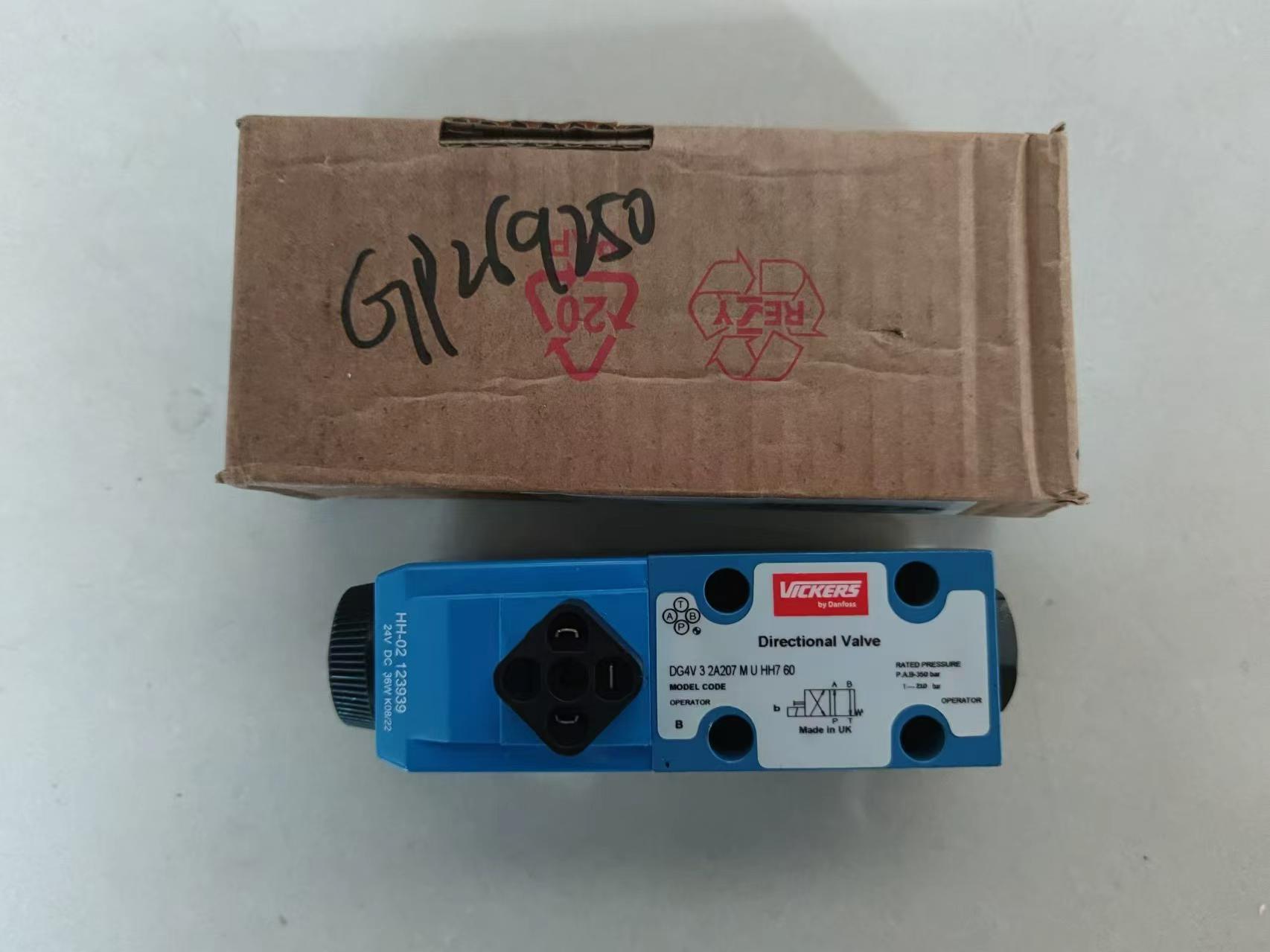
Model designations listed in the range include RVSAE3DS112401, COMPENSATED FLOW CONTROL VALVE 76L/MIN, 3/2 WAY SEAT DIRECTIONAL VALVE STD, DG4V32AMUH760, PROPORTIONAL VALVE 50-25L/MIN 10VDC, and 24V 50HZ SAFETY VALVE.
Control Valve: Setting a Defined Value in the Circuit
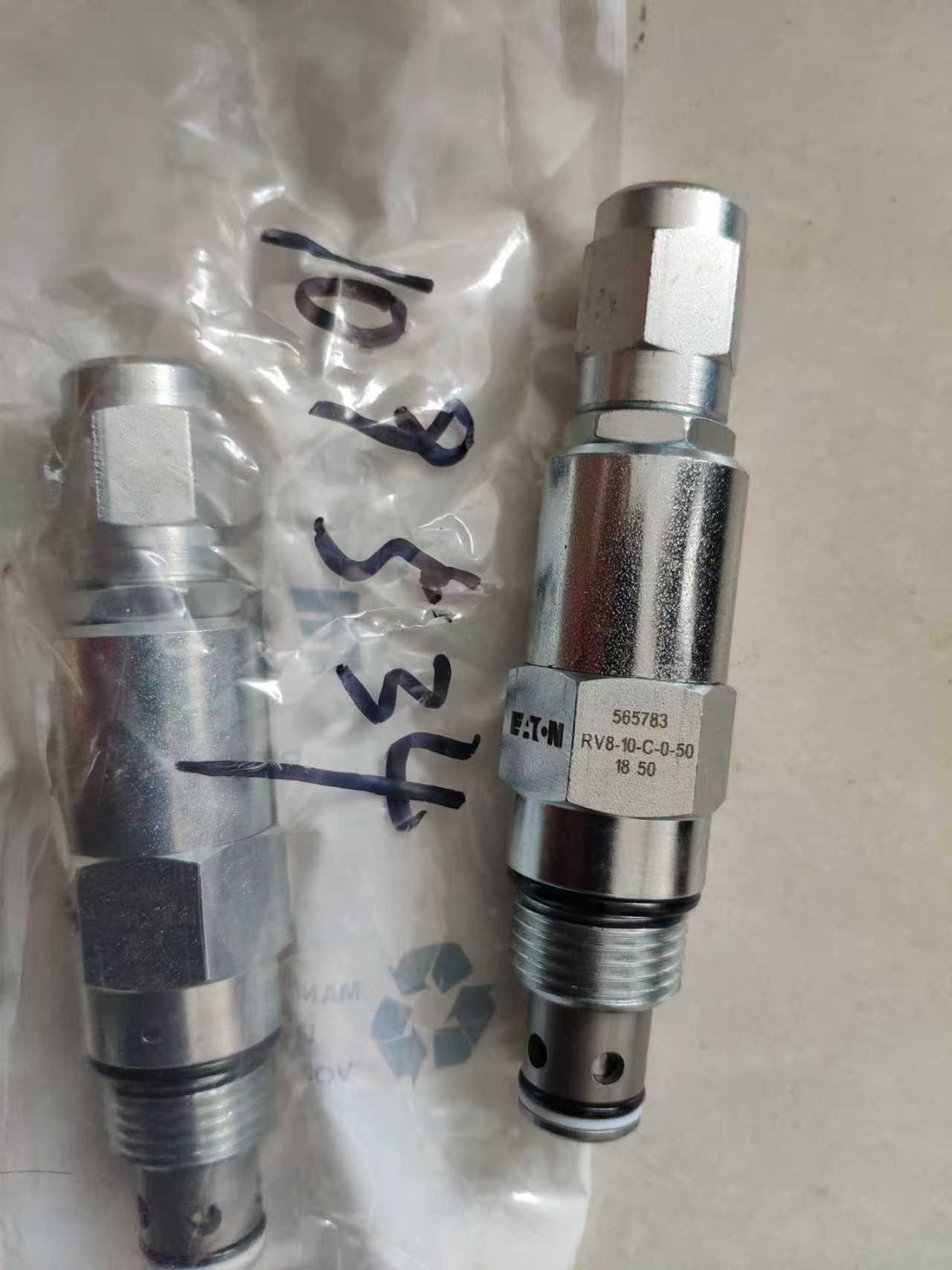
A control valve regulates the magnitude of flow or pressure in a hydraulic circuit rather than switching the direction of the fluid. In general hydraulic practice, control valves are selected where a circuit needs a defined, repeatable setting: a specific flow rate, a compensated flow level, or a pressure threshold that should hold steady across the operating cycle.
The designation in this range reflects that logic. A compensated flow control valve carries a flow value (76 L/MIN) in its name because that value is the purchasing parameter. If the flow value is wrong, the actuator moves at the wrong rate and the repair does not close out.
Proportional Valve: Modulating Output Continuously
A proportional valve changes its output continuously in response to an electrical command, so flow or pressure can be varied rather than fixed. In general practice, proportional valves are used where a hydraulic function has to move smoothly through a range of positions, or ramp up and down, instead of switching between discrete states.
The proportional valve designation in this range shows the two characteristics a buyer has to match: the flow range (50-25 L/MIN) and the electrical command rating (10 VDC). Both belong on the verification checklist, because a proportional valve that does not match the command signal in the circuit cannot simply be replaced by a control valve with a similar flow figure.
How the Other Valve Types Fit Around Them
A wind turbine hydraulic system generally uses several valve functions at once. Directional valves switch flow paths, safety valves protect the circuit against overpressure, check valves prevent reverse flow, flow control valves set the rate of actuation, and proportional valves provide continuous modulation where the function requires it.
Because all five types sit inside one valve range and share the same steel body and the same 0-320 Bar and -40°C to 200°C envelope, the buyer's task is not to find separate suppliers per type. It is to identify which function the failed part performed, then select the matching type and designation.
Boundary condition: this comparison does not establish that either type is superior, and it does not authorise substitution between types. Because control and proportional valves perform different functions in the circuit, replacing one with the other requires engineering review and documented approval before the part is ordered.
Step-by-Step: Choosing Between a Control Valve and a Proportional Valve
- Step 1 - Identify the lost function before the part number. Ask what the circuit stopped doing: holding a set flow or pressure, switching a flow path, limiting pressure, preventing reverse flow, or modulating an actuator through a range. The answer determines the valve family.
- Step 2 - Read the original designation off the turbine documentation. Compare it against the designations listed in the valve range: RVSAE3DS112401, COMPENSATED FLOW CONTROL VALVE 76L/MIN, 3/2 WAY SEAT DIRECTIONAL VALVE STD, DG4V32AMUH760, PROPORTIONAL VALVE 50-25L/MIN 10VDC, and 24V 50HZ SAFETY VALVE. Where the designation states the function, treat that as a check, not an assumption.
- Step 3 - Match the published specification envelope. Confirm the replacement sits within a 0-320 Bar pressure range, a -40°C to 200°C temperature range, a 850-5000 kW power range, steel body material and wind farm application. A part outside this envelope is a different procurement conversation.
- Step 4 - Confirm the functional family. The range covers control, directional, proportional, safety and check valves. Record which family the failed part belongs to and keep that classification on the purchase order.
- Step 5 - Confirm platform applicability. The same spare parts range is applicable to Gamesa, Vestas, GE and SGRE turbines. Confirm which platform the valve is going into, because identification conventions differ between fleets.
- Step 6 - Check naming conventions across the rest of the repair list. Gamesa spare parts are listed under GP-prefixed and numeric designations such as GP011974, GP238666 and GP004849, while Vestas spare parts appear under numeric designations such as 34729, 45488 and 46346. Mixed conventions on one work order are a common source of ordering errors.
- Step 7 - Verify site conditions and documentation requirements. Offshore and coastal installations require corrosion resistance in addition to heat and cold resistance, and component compliance is assessed against ISO 9001 and IATF 16949 for power transmission and safety reliability. Confirm both before order release.
- Step 8 - Bundle the order and confirm availability. Most valve repairs also consume hydraulic hose, couplings or electrical parts. Consolidating the list reduces freight cost and shipping risk on a cross-border order.
Use Cases: Where Each Valve Type Appears in Wind Turbine Repairs
Fixed hydraulic actuation rate - control valve. Where a circuit needs a defined flow or a compensated flow level, the control valve is the family to source, and the rated flow value in the designation becomes the primary matching parameter.
Continuous modulation of a hydraulic function - proportional valve. Where a hydraulic actuator has to move through a range rather than between fixed positions, the proportional valve family applies, and the electrical command rating shown in the designation becomes a matching requirement alongside the flow range.
Overpressure protection - safety valve. A safety valve carries an electrical rating in its designation (24V 50HZ SAFETY VALVE) and belongs to the same steel-bodied range as the control and proportional types.
Flow path switching - directional valve. The 3/2 WAY SEAT DIRECTIONAL VALVE STD designation shows a directional function described by its port and position configuration, which is the detail a buyer needs to confirm against the circuit.
Reverse flow protection - check valve. Check valves prevent reverse flow in the hydraulic circuit and complete the five-type valve family used in wind turbine applications.
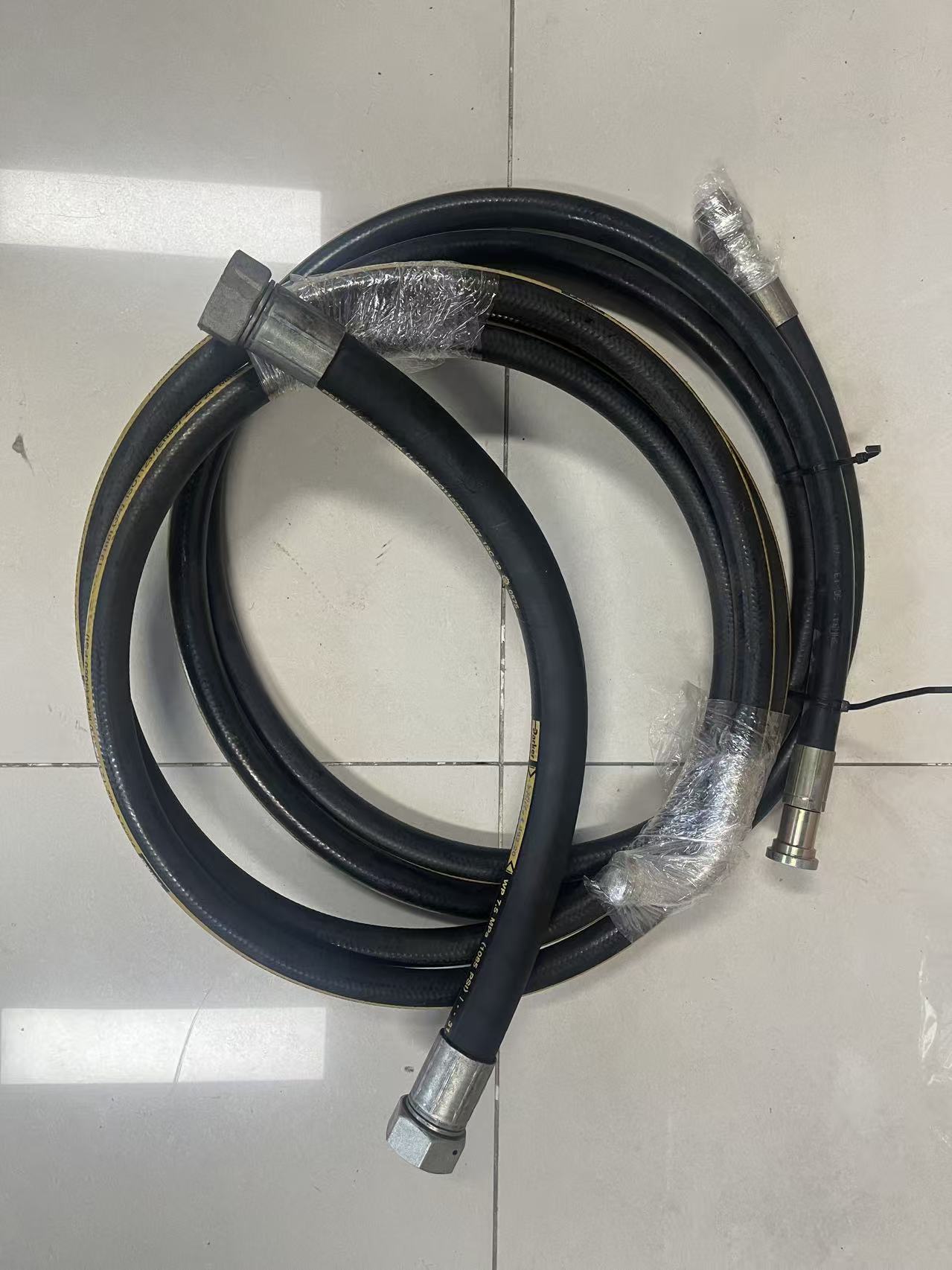
Yaw and platform hydraulic functions. On platforms that use hydraulic circuits for yaw-related functions and positioning duties, the valve is usually one line on a longer work order. Adjacent parts from the same catalogue include yaw motors (models such as GP122842, GP243450, 101180, GP587472 and GP119038), gearboxes (models such as GP127153, GP411441, P3014A and GP118897), couplings (models such as GP479559, GP479562, GP517817 and GP083595) and hydraulic hose in sizes from DN4 to DN50 with a working pressure range of 0-320 MPa, a temperature range of -40°C to +125°C and customisable lengths up to 60 metres.
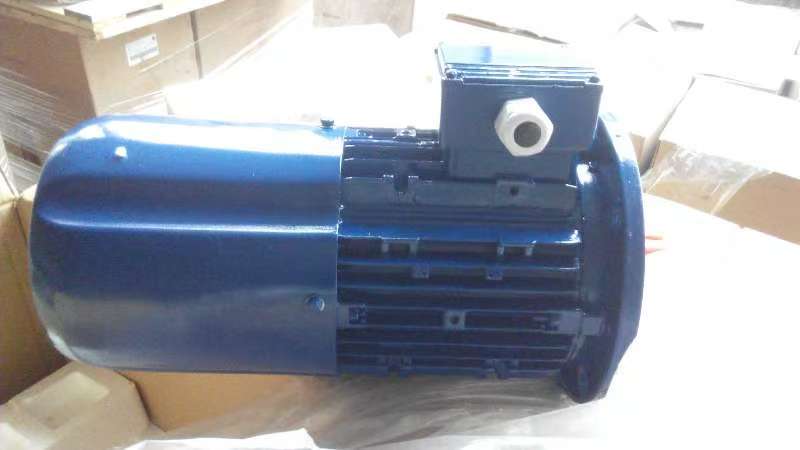
Multi-brand fleet maintenance. The same spare parts range is applicable to Gamesa, Vestas, GE and SGRE turbines. Electrical and rotating components frequently ordered on the same ticket include carbon brushes made of carbon, copper and silver (models including CANT01, CANT04 R140 and RC53), Ingeteam parts for wind turbine power converters and control systems (models including AK9320, AK9961, AK9110, DRIVERS SIMPLE CARD, DRIVERS DOUBLE CARD and AK9322 INTERFACE BOARD), rotary joints and slip rings (models including GP127965, GP127960, GP492093, GP464924 and GP464923) and circuit breakers in the FG001, FG002, FG005 and FG008 categories (models including GP018171, GP047112, MVS25T33FA2 and 1SDA058193R1).
Control Valve vs. Proportional Valve: Comparison Table
The table below compares the two types using the specifications published in the wind turbine valve range. It is a functional comparison, not a ranking: neither type replaces the other.
| Decision factor | Control valve | Proportional valve |
|---|---|---|
| Functional family in the valve range | Control valve | Proportional valve |
| Role in the hydraulic circuit | Regulates the magnitude of flow or pressure to a defined, repeatable setting | Modulates flow or pressure continuously in response to an electrical command |
| What the model designation carries | A rated flow value, for example 76 L/MIN | A flow range and an electrical command rating, for example 50-25 L/MIN and 10 VDC |
| Example designation in this range | COMPENSATED FLOW CONTROL VALVE 76L/MIN | PROPORTIONAL VALVE 50-25L/MIN 10VDC |
| Body material | Steel | Steel |
| Published operating envelope | 0-320 Bar; -40°C to 200°C; 850-5000 kW; wind farm application | 0-320 Bar; -40°C to 200°C; 850-5000 kW; wind farm application |
| Verification focus before ordering | Rated flow value and the function the circuit lost | Flow range and electrical command rating |
| Substitution risk | Both types sit in the same range and share the same steel body and pressure envelope, so neither can be assumed to replace the other. A change of valve family requires engineering review and documented approval before ordering. | |
Frequently Asked Questions
What standards apply to wind turbine valves and hydraulic components?
Wind turbine components must comply with ISO 9001 and IATF 16949 standards covering power transmission and safety reliability. For valve sourcing specifically, buyers should confirm the published operating envelope of the part being ordered, which for this range means a 0-320 Bar pressure range and a -40°C to 200°C temperature range, and should confirm that coastal or offshore sites are covered by corrosion resistance requirements in addition to heat and cold resistance. Documentation should be requested for the exact model designation on the purchase order, because compliance is assessed per part rather than per supplier.
Can a single supplier cover both control valves and proportional valves for Gamesa and Vestas turbines?
Yes. The valve product range includes control valve, directional valve, proportional valve, safety valve and check valve types, all steel-bodied, with a published pressure range of 0-320 Bar, a temperature range of -40°C to 200°C and a power range of 850-5000 kW for wind farm applications. The same spare parts catalogue is applicable to Gamesa, Vestas, GE and SGRE turbines, so a multi-brand maintenance programme can consolidate valve sourcing instead of splitting it across several suppliers.
What drives the cost of a control valve compared with a proportional valve?
No public price list is published for this range, so cost has to be quoted per model designation rather than per valve family. Four factors move the quotation: the functional family and the specification values carried in the designation (a proportional valve states a flow range and an electrical command rating, for example 10 VDC), the exact model designation and whether it is a listed designation in the range, the order quantity and whether the valve is bundled with other parts on the same work order, and the cost of the downtime the replacement avoids. Tianjin Saintloga's export business accounts for 65% of total sales, which means cross-border freight, documentation and customs handling are routine parts of a quotation rather than exceptions. Comparing total landed and downtime cost is more useful than comparing unit price alone.
How can a valve be validated against a specific turbine before a full order is placed?
Start with the original designation and the circuit function that was lost, then check the proposed replacement against the published envelope (0-320 Bar, -40°C to 200°C, 850-5000 kW, steel body, wind farm application) and against the platform (Gamesa, Vestas, GE or SGRE). Where the designation states the function and setting, as COMPENSATED FLOW CONTROL VALVE 76L/MIN and PROPORTIONAL VALVE 50-25L/MIN 10VDC do, that value can be verified directly against the circuit requirement before committing. For model-specific confirmation ahead of order release, contact the supplier directly at xiaolin.wang@saintloga.cn or +86 18189574729.
What determines lead time on a valve replacement order?
No fixed lead time is published, because it depends on the specific designation and on the rest of the order. Three factors consistently affect it: whether the required model matches a listed designation in the valve range or has to be sourced as a non-listed item, whether compliance documentation is complete before order release, and how the order is consolidated. Tianjin Saintloga operates a 500-square-metre facility with an annual production capacity of 100,000 units and approximately 42 staff, and exports to markets including Vietnam, Thailand, Philippines, New Zealand, Indonesia, Spain, Brazil, India, Mexico, Russia and Turkey, so freight planning forms part of the schedule. The fastest way to obtain a firm date is to send the model designation, quantity and delivery site for a quotation.
Conclusion: A Functional Decision, Not a Price Decision
Control valves and proportional valves are not two versions of the same part. A control valve sets a defined flow or pressure value in the circuit; a proportional valve modulates its output against an electrical command. Both are supplied within the same steel-bodied wind turbine valve range, with the same 0-320 Bar pressure range, -40°C to 200°C temperature range and 850-5000 kW power range, and both are applicable to Gamesa, Vestas, GE and SGRE platforms.
For a repair team, the decision sequence is short and specific: identify the lost function, match the designation, confirm the specification envelope, confirm the platform, and only then compare commercial terms. The valve family should never be selected on price, because a mismatch costs a second downtime window on a turbine that has already stopped producing.
Tianjin Saintloga International Trade Co., Ltd. supplies the full valve range alongside wind turbine spare parts for major platforms, together with wind turbine maintenance services and import and export trading services. The catalogue is available as a downloadable PDF brochure, and company information is published at www.saintloga.com.
Need a valve quotation or a model match confirmed?
Send the model designation, the platform, the quantity and the delivery site. The team can confirm whether the part maps to a listed designation in the control, directional, proportional, safety or check valve range and return a quotation with lead time.
Email: xiaolin.wang@saintloga.cn | Tel / WhatsApp: +86 18189574729
Have Questions or Need More Details?
Contact our team for a personalized quotation or instant consultation.
Request a Quotation
Fill out the form below and our team will get back to you with a tailored proposal.
WhatsApp Direct Chat
Prefer to chat in real-time? Message us on WhatsApp for instant assistance & quick answers.
- Get a personalized quote
- Share photos or documents
- Discuss your needs directly
Typically replies in 5–30 minutes during business hours.