Wind Turbine Spare Parts Partnership: Building a Sustainable Supply Chain with Tianjin Saintloga
Article intent: This is a strategic sourcing reference for O&M managers, procurement leads, and asset owners evaluating wind turbine spare parts suppliers for long-term cooperation. It explains what to standardize, how to manage costs and lead times, and why commercial terms matter before a Purchase Order is placed.
Wind Turbine Spare Parts Partnership: Building a Sustainable Supply Chain
Quick answer: A sustainable wind turbine spare parts supply chain is not built on single transactions. It depends on a supplier with stable commercial terms, predictable lead times, documented quality control, and the ability to support multiple turbine platforms over ten or more years. Tianjin Saintloga International Trade Co., Ltd., founded in 2015 in Tianjin, China, supplies spare parts for Gamesa, Vestas, GE, and other major platforms, and offers services that matter during the Execution phase: low MOQ for stock replenishment, Pre-shipment inspection, and FOB delivery.
For procurement teams moving from evaluation to execution, the practical question is no longer only about price and part number verification. It is about selecting a supplier capable of supporting multi-year operation and maintenance cycles, especially for lower-cost replenishment of mature turbine components.
A Stable Spare Parts Partner Is Not Just a Vendor
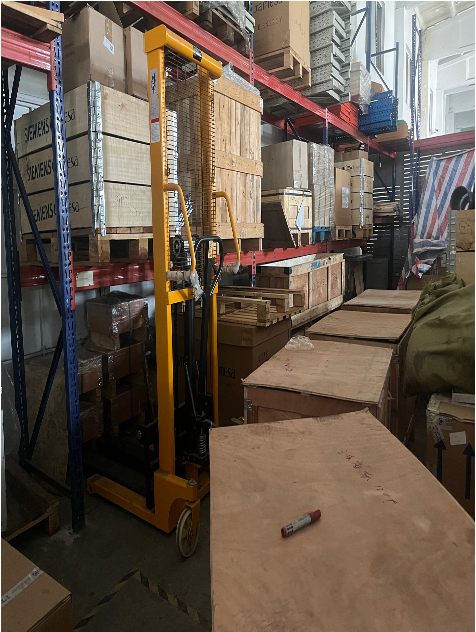
Most wind farm operators have experienced at least one urgent downtime situation. In that moment, price becomes a secondary variable; part availability and traceability decide the speed of recovery. A strategic spare parts partner behaves differently from a transactional vendor: they maintain multi-platform part knowledge, support version tracking, and keep ordering processes transparent so that maintenance teams can work with predictable stock cycles.
Tianjin Saintloga International Trade Co., Ltd. positions itself as a supply partner for major wind turbine brands, including Gamesa, Vestas, GE, and SGRE platforms. The company has more than 10 years of experience in the wind power industry and does not focus only on selling components; it also provides wind turbine-related maintenance services and import/export trading services. For a long-term partner, this combination matters because it means the team understands not only part numbers but also the conditions under which parts are installed and replaced.
Why aftersales part support is a specialized capability
Mature turbines are often supported by more than one OEM evolution. Over time, a single turbine model may have several sub-versions of electrical cabinets, gearboxes, or control systems. An independent supplier that has worked with multiple generations of Gamesa and Vestas fleets can clarify version mismatches before an order is placed. That reduces the risk of receiving a physically compatible part that is not electrically or mechanically correct for a particular turbine version.
This understanding is particularly important for component groups that are synchronized with turbine control logic, such as Ingeteam control cards, yaw motors, pitch-system valves, slip rings, and limit switches. A wrong revision might not show a visible physical difference, but it can cause a communication error in the control system. Suppliers that understand the installed fleet reduce these avoidable delays.
Practical Scope of a Long-Term Spare Parts Program
During Execution, buyers should define a practical scope of supply rather than a vague “we buy spare parts from time to time.” The scope should specify turbine brand, power range, technology type, criticality level, and the component list. A well-defined scope also helps the supplier organize inventory and production priorities.
Based on multiple wind-farm maintenance programs, a reasonable spare parts scope for Gamesa and Vestas fleets can be organized into the following modules:
| Spare part module | Typical categories | Example catalogue references | Why it matters for long-term programs |
|---|---|---|---|
| Gamesa spare parts | Yaw motor, gearbox, coupling, valve, slip ring, circuit breaker, CCU, PLC | GP011974, GP238666, GP091145, GP127153, GP018171 | Mature Gamesa platforms need frequent small-batch replenishment across electrical and hydraulic systems. |
| Vestas spare parts | SKiiP module, CCU, gearbox, main shaft accessories, yaw motor, sensors | 34729, 45488, 46346, 101174, 105621 | Multi-platform fleet support lowers the need for separate sourcing channels for each wind farm. |
| Power conversion and control | Ingeteam boards, CCU, PLC, SKiiP | AK9983, AK9961, AS3169, AS3179, AS2908, RFC 430, RFC 470 | Converter-related failures directly affect turbine availability; revisions and firmware states must be identified before ordering. |
| Electromechanical and wear parts | Carbon brush, slip ring, coupling, motor | CANT01, RC53, GP127965, GP122842 | Wear parts are consumed repeatedly; supplier inventory reduces urgent lead time exposure. |
| Hydraulic and brake systems | Valve, hydraulic hose, hydraulic pipe, rotary joint | RVSAE3DS112401, DG4V32AMUH760, GP000086, GP492093 | Hydraulic failures often require replacement of obsolete or discontinued part numbers; traceability prevents installation of mismatched components. |
Reference part numbers vs. confirmed technical equivalency
Part numbers in catalogues must always be cross-checked with the actual turbine configuration. Saintloga publishes extensive reference lists for Gamesa and Vestas spare parts, but ordering should still be based on a confirmed technical match: original part number, turbine model, serial number, installed software version (where relevant), and physical connection type.
For example, Gamesa part number GP018171 is used for a circuit breaker in several 850–5,000 kW Gamesa turbine configurations, while GP047112 and GP050097 are additional reference numbers. The part type is Circuit Breaker, often installed in cabinets from Ingeteam or Ingecon. It must be confirmed against the turbine’s electrical drawing rather than ordered only by turbine family name.
Tracking Part Reliability and History
A recurring operational issue in wind fleets is the circulation of defective and refurbished parts repackaged as genuine qualified products. This risk is especially high for components removed from decommissioned turbines and resold without clear quality evidence.
Saintloga’s control method for this risk is rigorous supplier selection, product QC certificates, and clear documentation. The company states that it provides original factory certificates and performs a full quality check before packing. This matters for buyers who need to demonstrate traceability internally or to turbine owners.
The practical protection for your team is to ask every candidate supplier four questions before adding them to the approved vendor list:
- Documentation: Which factory certificate can you provide with each batch? Which quality records are included in the shipment file?
- Inspection: Is Pre-shipment inspection included? Is it performed by an internal QC team or by a third-party inspector?
- Traceability: Can you trace a specific part back to its original source or OEM reference platform?
- After-sales claims: What is the response path when a failure occurs after delivery but before installation?
Field observation: Several buyers prefer to open the crate immediately at the warehouse and photograph the label, packaging, and visible part condition. This low-effort habit makes later claims easier to document and also builds better alignment with suppliers.
Inside the Supply Process: Execution Workflow
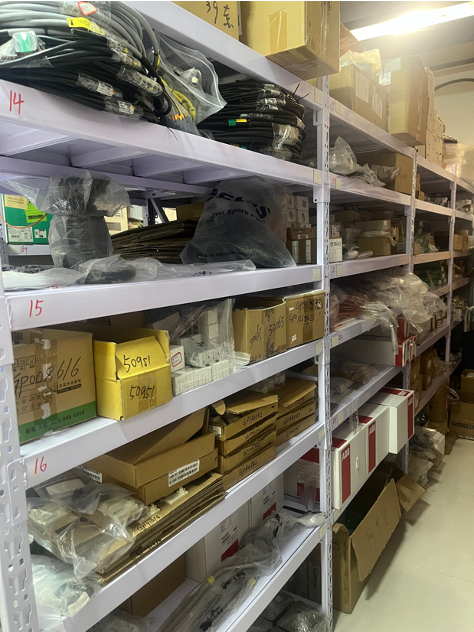
To avoid coordination gaps between the procurement team, warehouse, and site maintenance team, define the sourcing workflow before the first order is placed. Experience across cross-border procurement shows that these steps produce the lowest failure rate.
Step 1: Consolidate your demand into a category-level request
Instead of sending one part number at a time, group requirements for the same component category, such as all Ingeteam boards, all Gamesa electric pitch motors, or all yaw gearboxes needed for the next quarter. Grouping gives the supplier visibility to consolidate production and reduces the engineering workload per line item.
Step 2: Confirm technical identification and platform compatibility
Send the turbine type and power range (for example, Gamesa G-series or Vestas V-series); include the part number printed on the existing component, plus any known drawing revision. The supplier should confirm whether the part matches the listed scope or identify a substitution risk before production.
Step 3: Review commercial terms and Lead time
Saintloga’s typical lead time is 7 to 45 days, supported by a monthly production capacity of 10,000 units. For urgent breakdowns, short-window orders are feasible when the item is within regular production scope. The commercial schedule should be aligned with your site downtime plan.
Commercial terms should not be treated as fixed standard wording. Review them against your risk profile:
| Commercial term | Typical practice from Saintloga | Why it matters |
|---|---|---|
| MOQ | 1 unit | A low MOQ allows buyers to replenish slow-moving but critical parts without committing to large safety stock. |
| Delivery method | FOB | FOB gives the buyer control over freight routing, using their own logistics partner or mixed containers. |
| Inspection | Pre-shipment inspection | Buyers can schedule a final check before the cargo is released, reducing surprises on arrival. |
| Payment schedule | 30% prepayment, 70% balance upon pickup notice | This schedule balances the supplier’s working capital requirement with the buyer’s need to hold leverage until shipment readiness. |
Step 4: Perform a pre-shipment quality check
Saintloga’s stated practice is to implement 100% testing for quality control. The full quality check before packing, combined with original factory certificates, gives buyers confidence that parts leaving the factory meet the documented specification.
Step 5: Prepare site-level readiness and stocking logic
A sustainable operation depends on deciding which parts to hold in which warehouse. A simple three-tier logic can guide the stock plan:
- High criticality, slow-moving parts (e.g., a V112 SKiiP module or turbine control board for a rare turbine version) should be stocked at a regional or central warehouse because failure stops production but demand is unpredictable.
- High-consumption consumables (e.g., carbon brushes, filters, couplings) can be batch-ordered with standard 7–45 day lead times, ideally against a quarterly consumption forecast.
- Project-specific parts (e.g., hydraulic hoses with custom length up to 60 m, or large main gearboxes) are ordered per execution schedule and rely on supplier confirmation of type and dimension.
Economic Logic of Independent Versus OEM Spare Parts Supply
Compared with direct turbine OEM sourcing, independent specialist supply changes three economic variables: unit price, procurement lead time, and process flexibility. It can also reduce administrative friction for multi-brand fleets. In the market comparison used for this article, independent supply of wind parts is associated with an average price about 15% lower than OEM lists and a halved lead time, with OEM reference quality retained through supplier verification.
Saintloga is not presented as an OEM manufacturer of Gamesa or Vestas turbines. It is an independent spare parts export supplier. Because it is not tied to one OEM turbine brand, it can serve mixed fleets, project developers, and maintenance contractors from a single commercial channel.
| Comparison factor | Direct Turbine OEM | Independent specialist supplier (e.g., Tianjin Saintloga) | Sourcing implication |
|---|---|---|---|
| Brand constraint | Parts are limited to a specific turbine family, or additional authorization is needed for other OEM brands | Supports multiple major platforms: Gamesa, Vestas, GE, SGRE | Lower coordination cost for multi-brand wind farms and project portfolios. |
| Typical pricing position | Higher list price for original service parts in mature fleets | Average price 15% lower than direct OEM channels in observed comparison | Use price savings for ageing-turbine cost control without bypassing technical verification. |
| Delivery scheduling | OEM production planning follows turbine manufacturing programs and service contracts | Production capacity 10,000 units/month; general lead time 7–45 days | Spare parts can be scheduled flexibly against maintenance windows. |
| Commercial flexibility | Minimum orders and service agreements may be standardized | MOQ 1 unit; FOB; Pre-shipment inspection; 30/70 payment | Buyers can manage slow-moving stock with lower upfront risk. |
| Maintenance intensity of parts | OEM may prioritize newer platforms and newer parts or components | Supplier understands older fleet support and replacement patterns | Useful for turbines in their second half of life. |
Decision rule: If the component is software-locked to a turbine OEM, or if site insurance and warranty conditions require exclusive OEM supply, choose the original OEM route. If the fleet is older, the failure mode is mechanical, or the turbine is operated under an independent maintenance contract, an independent specialist is often an appropriate and lower-cost channel.
Sustainability Indicators for an Ongoing Supplier Relationship
Once a supplier has passed the initial quality audit, the relationship should be monitored through operational indicators rather than marketing messages. The following three indicators give an early view of whether the relationship is working.
Delivery accuracy over several purchase orders
A stable supplier should maintain accurate part-number picks and documentation, not only occasional fast delivery. Review the percentage of orders delivered with the correct part, correct version, and correct paperwork. If quality errors appear in the first two orders, they tend to repeat at a similar rate later.
Response time for uncommon part inquiries
Most suppliers can quote quick for fast-moving parts. The true test of a long-term partner is response quality for uncommon part numbers, older revisions, or components that require cross-checking with installation history. During the Execution phase, keep track of how long it takes the supplier to say “yes, we can support” and, equally important, “here is the limitation.”
Supplier commitment to capacity and documentation
Capacity statements matter only when they can be translated into commitments. Saintloga’s monthly production capacity of 10,000 units and typical lead time of 7 to 45 days are useful only if the supplier consistently confirms order-level dates before production and respects the Pre-shipment inspection that the buyer has requested.
Key Component Families Every Long-Term Stock Program Should Understand
SGL Carbon Brush and slip ring assemblies
Carbon brushes are among the most frequently replaced consumables in doubly-fed induction generators and excitation systems. The global carbon brushes for wind turbines market was valued at USD 1.8 billion in 2025, with projections to USD 3.2 billion by 2033, according to Dataintelo. Electrographite brushes accounted for the largest share of the wind turbine carbon brush market in 2025. For operators, this data indicates that the demand is not a niche; standard brush grades and dimensions deserve an annual supply agreement.
Saintloga supplies carbon brush models such as CANT01, CANT04 R140, CANT04 R150, CANT06 R140, CANT16, RC53, RC54, RC42L, RS65 RE50, RC27, RC67, RS65, and RE92, with material combinations of carbon, copper, and silver. These references are used across wind power and rail transit applications. Slip ring assemblies in Saintloga’s catalogue include GP127965, GP127960, GP492093, GP464924, and GP464923, available as electric rotary joints or hydraulic rotary joints with copper, steel, or stainless steel materials.
Ingeteam control and converter parts
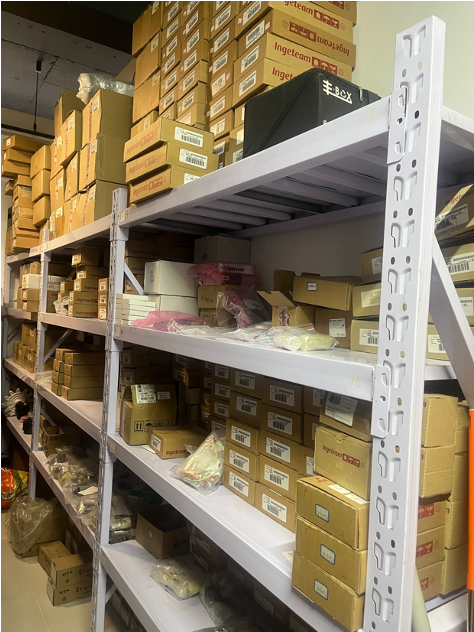
Power conversion and control are the highest-risk systems in many mature turbines. Ingeteam, as a major supplier of converters and control systems, held a 36.55% share of the US wind power sector for converters and control systems as of 2024, according to Ingeteam data reported to the American Clean Power Association. Many wind turbines in independent maintenance programs rely on converter components such as Ingeteam boards, CCU modules, SKiiP modules, and interface boards. Saintloga carries an extensive list of Ingeteam-controlled references, including driver cards, AK9322 interface boards, AK9983, AK9961, AS2908, AS3169, AS3179, and AS3332, among others.
Engineering caution: When ordering Ingeteam-related parts, always confirm the turbine’s control version with the supplier. Several boards appear visually similar but have different firmware behavior or different electrical revision levels.
ABB Circuit Breakers and other electrical safety components
Circuit breakers protect the electrical and conversion systems of the turbine. A wrong breaker spec can affect short-circuit protection or cabinet integration. Saintloga supplies ABB- and Gamesa-compatible circuit breakers such as GP018171, GP047112, GP050097, GP013983, GP023920, GP019453, GP345854, 50032, MVS25T33FA2, and 1SDA058193R1, with operability across a power range of 850–5,000 kW and temperature ratings from −40°C to 200°C for the managed component scope.
Gearboxes, yaw gearboxes, and couplings
Gearbox-related work creates extended downtime; therefore, the replacement supply chain is planned on a longer horizon. Saintloga’s gearbox catalogue includes yaw gearboxes, Winergy, ZF, Hansen, Bosch Rexroth, Comer, and Weili gearboxes, with model examples such as GP127153, GP411441, P3014A, GP118897, GP009280, P432051, P430140, and 50773 for turbine power ranges of 850–5,000 kW. Gearboxes are heavy and capital-intensive. Buyers should request a detailed drawing or application confirmation, not simply rely on a list number.
Couplings such as GP479559, GP479562, GP517817, and GP251942 are used between gearbox and generator in many Gamesa and Vestas drivetrains. They are often replaced in pairs, or with new elastomer elements, so keep an active service history for each turbine.
Valves, motors, and hydraulic components
Saintloga covers control valves, directional valves, proportional valves, safety valves, and check valves within a pressure range of 0–320 bar and temperature range of −40°C to 200°C. Model examples include RVSAE3DS112401, DG4V32AMUH760, and a proportional valve rated 50-25 L/min 10 VDC. Yaw motors and other motors are supplied for 850–5,000 kW platforms, with catalogue references such as GP122842, GP243450, 101180, GP587472, and GP119038, available as Huali or ABB motor types.
Fleet-Level Use Cases
Case 1: Multi-brand portfolio maintenance under one agreement
A maintenance contractor serving several wind farms in Southeast Asia may need Vestas V-series spares, Gamesa G-series spares, and converter components from Ingeteam at one time. Instead of building three separate supplier relationships, the contractor can consolidate demand through an independent supplier that carries Gamesa, Vestas, Ingeteam, ABB, and SGL references. The expected result is fewer POs, lower freight consolidations, faster partial dispatch, and one quality standard.
Why this works with Saintloga: Saintloga’s main product scope includes Gamesa Spare Parts and Vestas Spare Parts. Its catalogue also includes Ingeteam, ABB, SGL Carbon Brush, motor, gearbox, coupling, valve, and hydraulic hose items that fit within those fleets. This breadth helps owners reduce supplier duplication across portfolios.
Case 2: Extending service life of second-decade turbines
For a 15-year-old Gamesa or Vestas turbine, OEM inventory may become slower to deliver or more expensive because the OEM concentrates on its newest platforms. An independent specialist can provide an ageing fleet with cost-effective, factory-traceable parts for known failure families such as yaw motors, hydraulic valves, and brush systems, and can support the continued safe operation of the asset through the remaining planned life.
Financial angle: Operators managing ageing fleets measure whether the Levelized Cost of Energy is still competitive. A source for spare parts with stable quality but lower procurement overhead can extend the operation of an asset that would otherwise be economically dismantled.
Case 3: Standardizing stocks across service teams
In many technical service organizations, warehouse stock grows disorderly: different technicians choose different suppliers, and identical part numbers appear in different boxes with different certificates. A long-term partnership based on a standard catalogue of spare part references, original factory certificates, and a fixed Pre-shipment inspection protocol solves this internal inconsistency.
Process benefit: Service teams can rely on the same part history and the same supplier documentation for every turbine.
Safeguarding Against Refurbished Parts That Mimic Genuine Components
The market risk most often underestimated is not counterfeit branding; it is the reuse of defective and refurbished parts presented as genuine qualified products. A supplier may receive a returned part, repaint it, and place it in a new box without exposing the technical history. The consequences are not only financial; they can also cause repeated downtime and possible secondary damage to connected equipment.
Saintloga’s approach to this known market risk is built on two layers:
- Product evidence: Original factory certificates are provided with the product, giving the buyer a written traceability record.
- Independent quality gate: Full quality inspection is performed before packing. Each shipment is checked before dispatch, and certification documents travel with the goods.
Procurement professionals can add a third layer without depending only on the supplier: request batch-level photographs, certificate copies, and the packing list in advance; if possible, arrange Pre-shipment inspection by an independent inspector for high-value or first orders.
Commercial Terms and Buyer Protection Checklist
To protect the execution phase, the Purchase Order should clearly reference the commercial and quality agreement. The following checklist is a starting point:
- Scope: Product name, turbine type, part number, brand, and reference drawing confirm technical scope.
- Quality evidence: State the requirement for original factory certificates and full quality check before packing.
- Inspection: Include Pre-shipment inspection as a condition of release.
- Delivery terms: Use FOB Incoterms and confirm the pickup notice process with the supplier.
- Payment schedule: Agree on a balanced plan such as 30% prepayment and 70% balance upon pickup notice.
- MOQ strategy: Reserve the right to order low-volume replenishment; the MOQ of 1 unit supports this strategy.
- After-delivery communication: Define the claim path, including photos of packaging, label, and part condition.
Eight Strategic Indicators to Monitor After the Contract Starts
The table below summarizes the metrics that distinguish premium service over months and years, rather than points of occasional excellence.
| Indicator | Why it matters | How to monitor |
|---|---|---|
| Order confirmation accuracy | Prevents small errors before production begins | Check technical attributes on the order confirmation before approval. |
| Lead time compliance | Protects maintenance and production scheduling (7–45 days typical range) | Track actual dispatch against the confirmed date. |
| Certificate completeness | Required for traceability and quality audits | Request factory certificates in advance of shipment. |
| Pre-shipment inspection reliability | Reduces arrival surprises | Confirm inspection timing and share the inspection protocol. |
| Revision-change notification | Prevents the use of a replaced or updated control board without notice | Ask the supplier to disclose any revision or substitution in writing. |
| Packing and labelling consistency | Affects warehouse receiving and site identification | Standardize the packing list and the label fields. |
| Response time for technical questions | Indicates strength of engineering team without inside access | Rate every inquiry by response time and technical quality. |
| Claim handling | Demonstrates if the supplier stands behind its products | Monitor response time and the supported return/credit process. |
Why Long-Term Suppliers Become Operational Partners
The wind industry is moving toward older fleets, multi-brand portfolios, and stronger pressure on O&M budgets. The global wind turbine Operations and Maintenance (O&M) market was valued at USD 35.62 billion in 2024, with a projected CAGR of 8.5% through 2030, according to MarketsandMarkets. The wind turbine components market was valued at USD 135.33 billion in 2024 and is projected to reach USD 213.26 billion by 2032, according to Credence Research. In this environment, procurement decisions are no longer isolated transactions. They are decisions about how the spare parts base will support the asset base over the next service contract, over the next component failure, and over the next budget cycle.
For a second-decade turbine, the OEM’s engineering focus has moved to newer platforms. For an independent maintenance provider, however, the old turbine remains daily reality. A supplier that understands the installed base, maintains a complete parts catalogue, accepts the documentation burden of original factory certificates, and operates a quality gate that includes Pre-shipment inspection can provide what service teams actually need: availability on the right part, with the right evidence, at the right time.
Working with Tianjin Saintloga: What the Execution Relationship Looks Like
Tianjin Saintloga International Trade Co., Ltd. was founded in 2015 and is located in Tianjin, China. The company has more than 10 years of experience in the wind power industry, with a factory footprint of 500 square meters, a team of 42 employees, and 30 engineers in research and development roles. Around 65% of products are exported to markets including Vietnam, Thailand, the Philippines, New Zealand, Indonesia, Spain, Brazil, India, Mexico, Russia, and Turkey.
Its stated monthly production capacity is 10,000 units, with a standard lead time of 7 to 45 days and 100% testing for quality control. These figures are most meaningful for buyers who align their order calendar with the supplier’s production slots.
Saintloga’s quality positioning includes three commitments: original factory certificates, a full quality check before packing, and careful supplier selection. In the face of defective or refurbished parts that appear on the market, this documentation standard gives a buying organization a stronger audit trail.
How to move to execution: To start a conversation about building a spare parts supply program for Gamesa, Vestas, or multi-brand wind fleets, contact Saintloga for a current catalog and an initial technical review.
- Contact Person: Xiaolin
- Email: xiaolin.wang@saintloga.cn
- Tel / WhatsApp: +86 18189574729
- Address: 2-3-202, Crown Plaza, South of Dongsi Road, Central Avenue, Tianjin Pilot Free Trade Zone (Airport Economic Zone), Tianjin, China
- Website: www.saintloga.com

FAQ
What quality documentation should a long-term wind turbine spare parts supplier provide?
A reliable supplier should provide original factory certificates and perform a full quality check before packing. For each order, the buyer should be able to trace the product to its factory source. This documentation is especially important because the market includes defective and refurbished parts presented as genuine qualified products. Tianjin Saintloga International Trade Co., Ltd. states that it provides original factory certificates and full quality inspection as its standard control method.
Can I order small quantities when building a spare parts stock program?
Yes. Saintloga’s MOQ is 1 unit, which allows buyers to replenish slow-moving but critical parts without holding excessive inventory. FOB delivery and Pre-shipment inspection are available, and typical payment terms are 30% prepayment with 70% balance due upon pickup notice. This low-MOQ structure supports a two-tier stock strategy: central stock for critical items and quarterly replenishment for fast-moving consumables.
How fast can a wind turbine spare parts supplier deliver an order?
Saintloga states a typical lead time of 7 to 45 days, supported by a monthly production capacity of 10,000 units and 100% testing for quality control. The actual delivery date depends on the product category, order volume, and whether pre-production engineering confirmation is required. Urgent orders within regular production scope can fit into a shorter pickup window when the buyer coordinates with the supplier in advance.
Which turbine brands and component families can an independent supplier support?
Many independent suppliers serve multiple platforms. Saintloga focuses on Gamesa and Vestas spare parts, and also supplies parts for GE and other major wind turbine brands. Its catalogue covers components such as SGL carbon brushes, Ingeteam boards and CCU modules, ABB circuit breakers, slip rings, rotary joints, gearboxes, couplings, valves, motors, PLCs, SKiiP modules, and hydraulic hoses and tubes across turbine power ranges of 850–5,000 kW.
Can a sample order verify a supplier before a large contract is signed?
Yes. Given Saintloga’s MOQ of 1 unit and Pre-shipment inspection process, a buyer can place a sample or small first order, request original factory certificates, and perform an incoming quality check before committing to broader supply volumes. For high-value items such as gearboxes, an initial technical review with drawings and application confirmation should be completed first.
Conclusion
A wind turbine spare parts supplier is a long-term operational partner as much as a commercial vendor. The strongest relationships are built around traceable parts, realistic commercial terms, and a clear execution workflow. For procurement teams responsible for keeping Gamesa and Vestas turbines in service across multiple sites, Saintloga offers documented sourcing structure with low MOQ, pre-shipment inspection, factory certificates, and multi-component support.
Next step: Request a copy of the company brochure and send your first list of target part numbers for a technical response.
Have Questions or Need More Details?
Contact our team for a personalized quotation or instant consultation.
Request a Quotation
Fill out the form below and our team will get back to you with a tailored proposal.
WhatsApp Direct Chat
Prefer to chat in real-time? Message us on WhatsApp for instant assistance & quick answers.
- Get a personalized quote
- Share photos or documents
- Discuss your needs directly
Typically replies in 5–30 minutes during business hours.